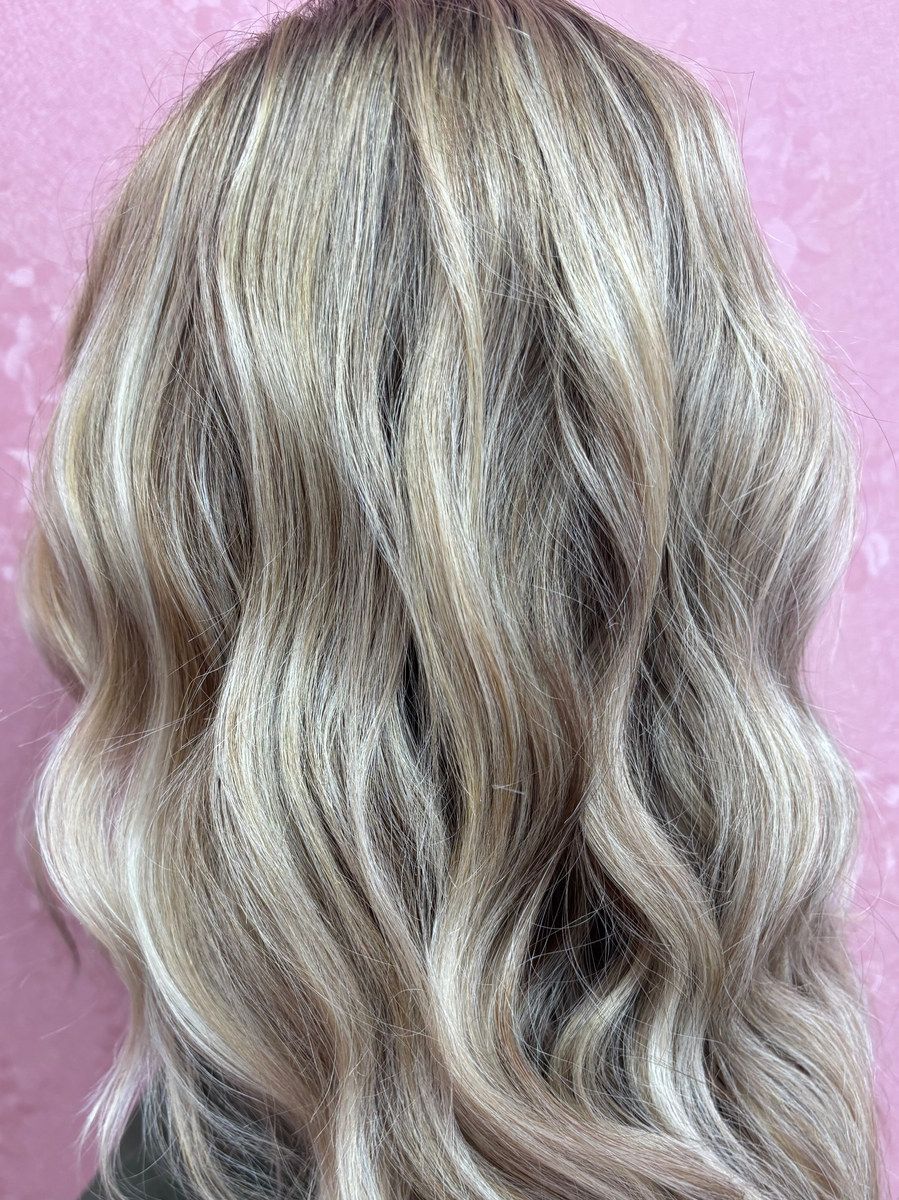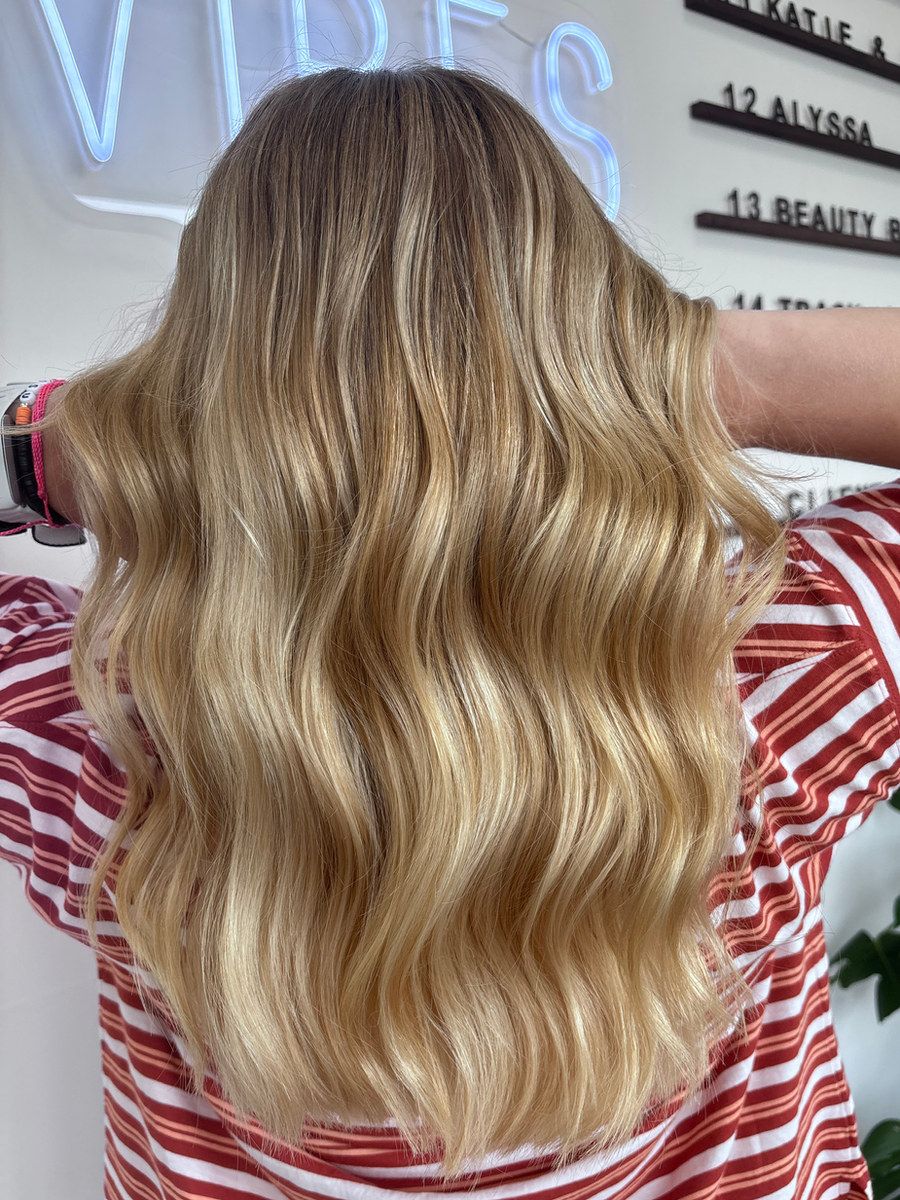
All over color, also called single-process color, applies one shade from root to ends. It's the go-to for going darker or richer, covering gray, and adding shine to dull hair. On the current menu it's one appointment of about two hours, and after that, root retouches keep it fresh as your hair grows.
What single-process color is
"Single process" means one step: one color formula applied to the whole head. There's no separate lightening step, no foils and no toning stage.
That makes it different from:
- Highlights and balayage, which lighten selected pieces
- Lowlights, which add deeper pieces
- Dimensional color, which weaves light and depth together
- High-lift blonde services, which lighten all over and then tone
It's simple, but the result can be striking. One even, glossy shade reflects light well, which is why freshly colored brunette or red hair can look so shiny.
On the current menu, All Over Color is $110 and takes about 2 hours.
Who it's for
Going darker or richer
Want to go from light brown to chocolate, or from faded blonde back to a natural brunette? Single-process color is how you get there. Going darker is much easier than going lighter, because you're adding pigment, not removing it.
One thing to know: if your hair is pre-lightened, it may need extra pigment to keep a new darker shade from looking hollow or fading fast. Your stylist will check your history and adjust.
Gray coverage
Permanent all-over color is the most complete way to cover gray. It gives a solid, uniform shade. Gray can be more resistant to color, so formulas are adjusted for coverage.
If you'd rather soften gray than hide it, gray blending with highlights and lowlights explains the alternatives.
Shine and tone refresh
Some people book all-over color just to bring back richness to hair that looks dull or brassy. Even a shade close to your natural color can make hair look healthier and more reflective.
Rich reds and coppers
Many warm reds and coppers start as single-process color. They fade faster than brunettes, so plan for more upkeep. Copper and red hair ideas covers shade choices and care.
What it can't do
All-over color won't make dyed hair lighter. Color doesn't lift color. If your ends are a darker shade from past dye and you want to go lighter, you'll need lightening or color correction instead.
It also won't create dimension on its own. If you want lighter pieces or a sun-kissed effect, look at highlights, balayage or dimensional color.
What happens at the appointment
- Consultation. Your stylist asks about your goal, your color history and any gray.
- Formula. A shade and developer are chosen for your hair and coverage needs.
- Application. Color usually goes on the roots first, then is pulled through the lengths, depending on your hair's history and condition.
- Processing. The formula sits for the time it needs.
- Rinse, condition and finish.
If you're going from very light to very dark, or have a complicated history, your stylist may suggest a free test strand first.
How single-process color fades
All hair color fades over time. How fast depends on the shade and your habits.
What speeds up fading:
- Frequent washing, especially with hot water
- Sulfate shampoos
- Sun exposure in Kansas City summers
- Chlorine from pools
- Hard water minerals from Johnson County taps
- High heat styling without protection
What it looks like:
- Brunettes can turn warm or brassy
- Reds lose intensity and look pinkish or faded
- Dark shades can look flat as shine fades
- Roots grow in, showing your natural color or gray
Care to keep it rich
- Wait a couple of days before your first wash if you can
- Use a sulfate-free, color-safe shampoo and conditioner
- Rinse with cooler water
- Wash less often; try dry shampoo on off days
- Use heat protectant every time you style
- Protect from sun with a hat or UV spray on long outdoor days
- Use a chelating shampoo now and then for hard water mineral buildup
After-color care: the first week has a day-by-day plan.
What comes next: root retouches
Once your shade is set, you don't need full all-over color every visit. A Root Retouch colors just the new growth. On the current menu it's $75 and takes about 1 hour 30 minutes.
Here's why that matters. Re-coloring your whole head every time stacks pigment on your ends. Over time they get darker, duller and less even. Focusing on the root keeps your color consistent from top to bottom. When the ends do fade, a gloss or a brief pull-through can refresh them.
A typical rhythm:
- All over color to set your shade
- Root retouches as regrowth shows
- A gloss when shine fades
- All over color again if you change shade or the lengths need a full refresh
The root retouch guide covers how often to book and how to stretch time between visits.
Questions to ask your stylist
- Will this shade cover my gray fully?
- Is permanent or demi-permanent better for my goal?
- How will this shade fade on my hair?
- Will my pre-lightened ends hold the color?
- When should I book my first root retouch?
Book all over color with Hoshika
I work one-on-one in a private studio inside Willow Salon & Suites on 135th Street in south Overland Park. Whether you want rich brunette, full gray coverage or just more shine, we'll talk through shade and upkeep at a free 15-minute consultation first. Book your color appointment or browse the full services menu.
Frequently asked questions
Can all over color make my hair lighter?
Color can lift natural hair slightly, but it cannot lighten hair that already has color in it. If you want to go noticeably lighter, you'll likely need highlights, balayage or a lightening service instead.
Is semi-permanent or permanent color better?
Permanent color covers gray more fully and lasts longer. Semi- and demi-permanent options fade gradually and are gentler, which some people prefer for shine or a subtle shift.
Will all over color damage my hair?
Single-process color is generally gentler than lightening, especially when only the regrowth is colored at later visits. Repeated full-length coloring is what tends to build up and dull ends.
How do I keep dark color from fading?
Wash less often with a color-safe shampoo, rinse with cooler water, protect from heat and sun, and book a gloss when the shine fades.
Book with Hoshika
Want this done for you?
Private one-on-one studio in Overland Park. Free consultations for big changes.