You have two main ways to handle gray: cover it completely with permanent color, or blend it with highlights and lowlights so it grows out softly. Full coverage gives you a uniform, solid color but shows a clear root line as it grows. Blending keeps some of your natural gray, softens regrowth and usually means fewer appointments. The right choice depends on how much gray you have, how much upkeep you want and where you'd like to end up.
Full coverage vs. blending at a glance
| Full coverage | Gray blending | |
|---|---|---|
| What it does | Covers gray with one solid color | Mixes gray with lighter and darker pieces |
| Look | Even, uniform color | Dimensional, softer, more natural |
| Regrowth | Clear line where gray grows in | Soft, less noticeable |
| Upkeep | Regular root touch-ups | Usually less frequent |
| Best for | Those who want no visible gray | Those okay with some gray showing |
| Services | Root Retouch, All Over Color | Highlights, Lowlights, Dimensional Color |
Option 1: full gray coverage
Full coverage uses permanent color to give you one even shade from root to ends.
Who it's for
- You want no gray showing at all
- You love a solid, single-tone color
- You don't mind regular root appointments
- Your gray is concentrated in spots and you want it gone
What to book
- All Over Color is $110 on the current menu, about 2 hours. It colors your whole head, root to ends.
- Root Retouch is $75 on the current menu, about 1 hour 30 minutes. It covers new growth at the root once you've had all-over color.
The catch
As gray grows in, it shows as a clear line against your colored hair. The more gray you have and the darker your color, the faster that line shows up. That's why full coverage tends to need the most frequent visits.
Option 2: blending with highlights
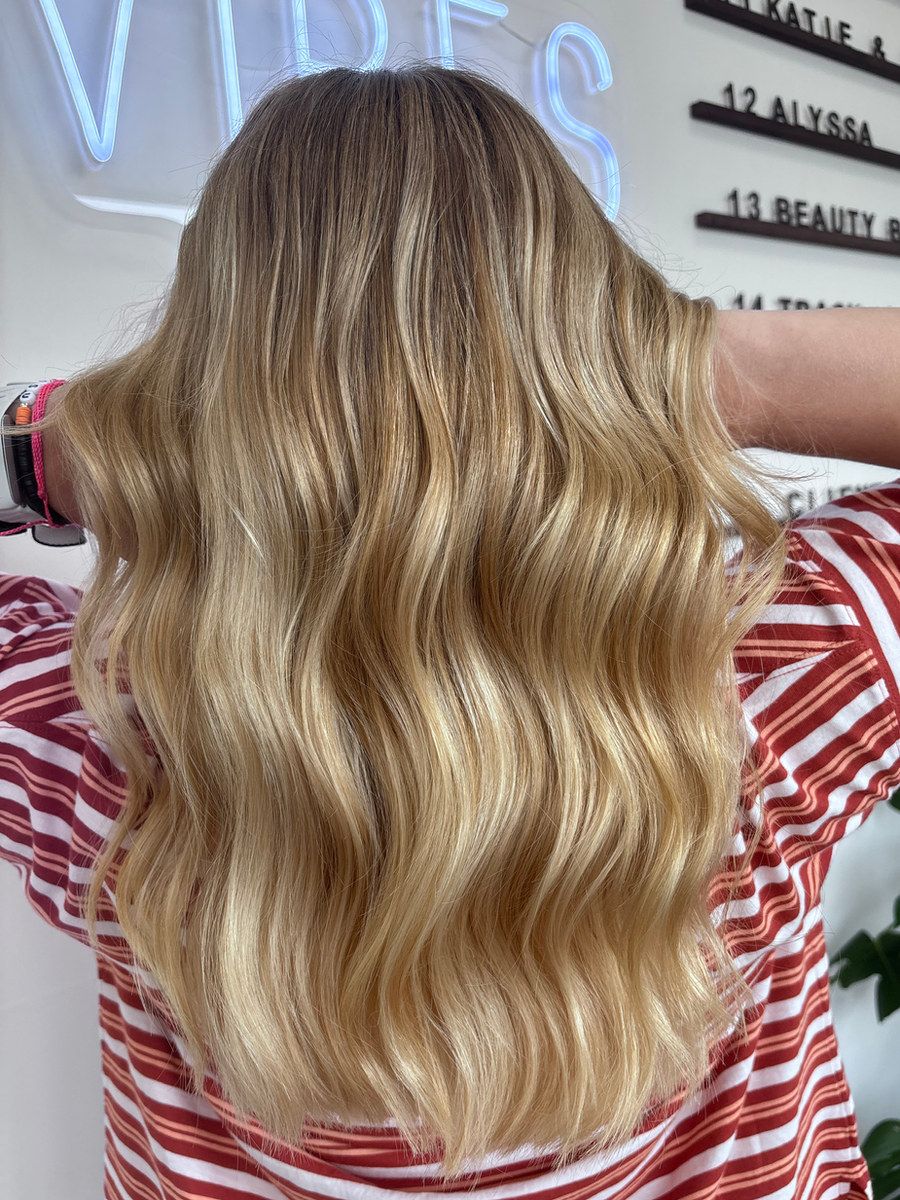
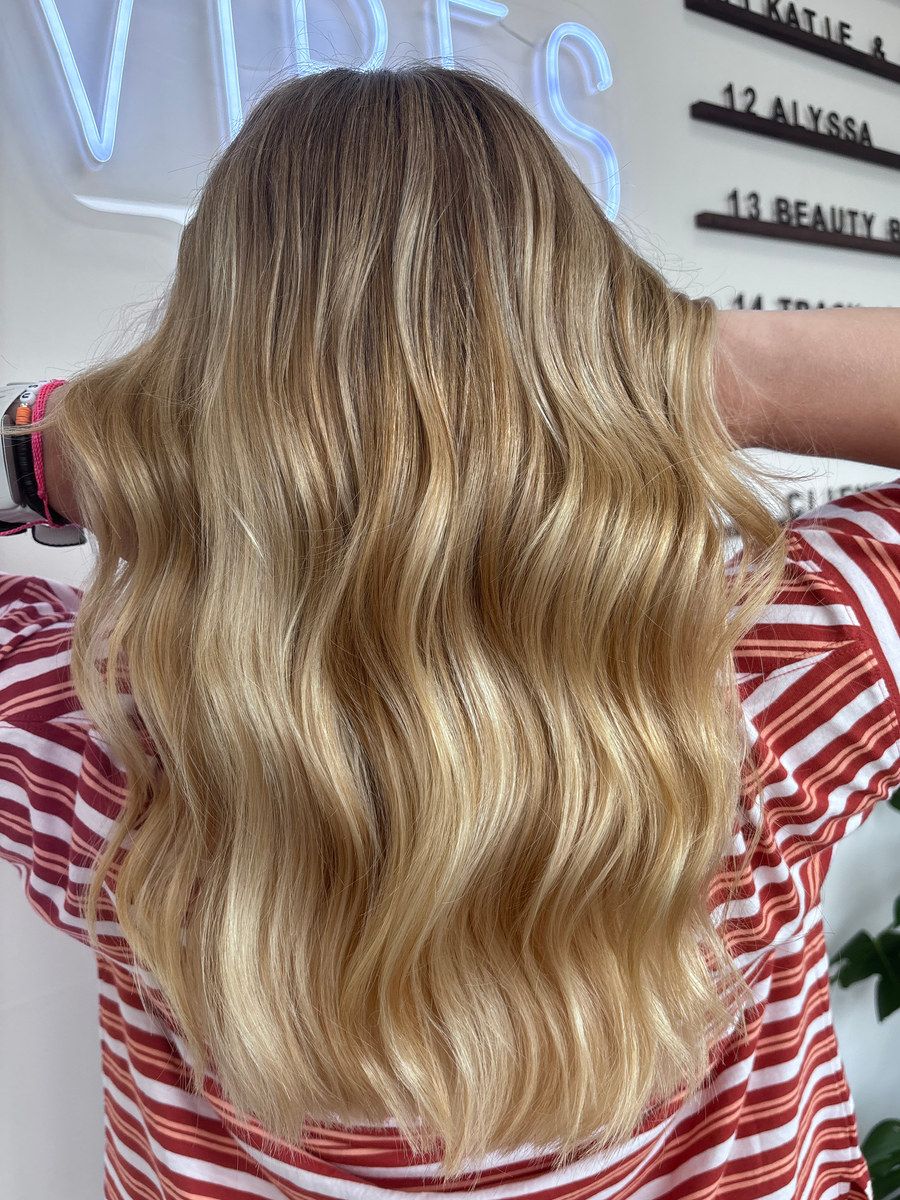
Highlights add lighter pieces that sit close to the shade of your gray. Your gray then looks like part of the highlight pattern instead of something to hide.
Who it's for
- You have a fair amount of gray, especially around the face and part
- Your natural color is light to medium
- You want regrowth to look soft
What it looks like
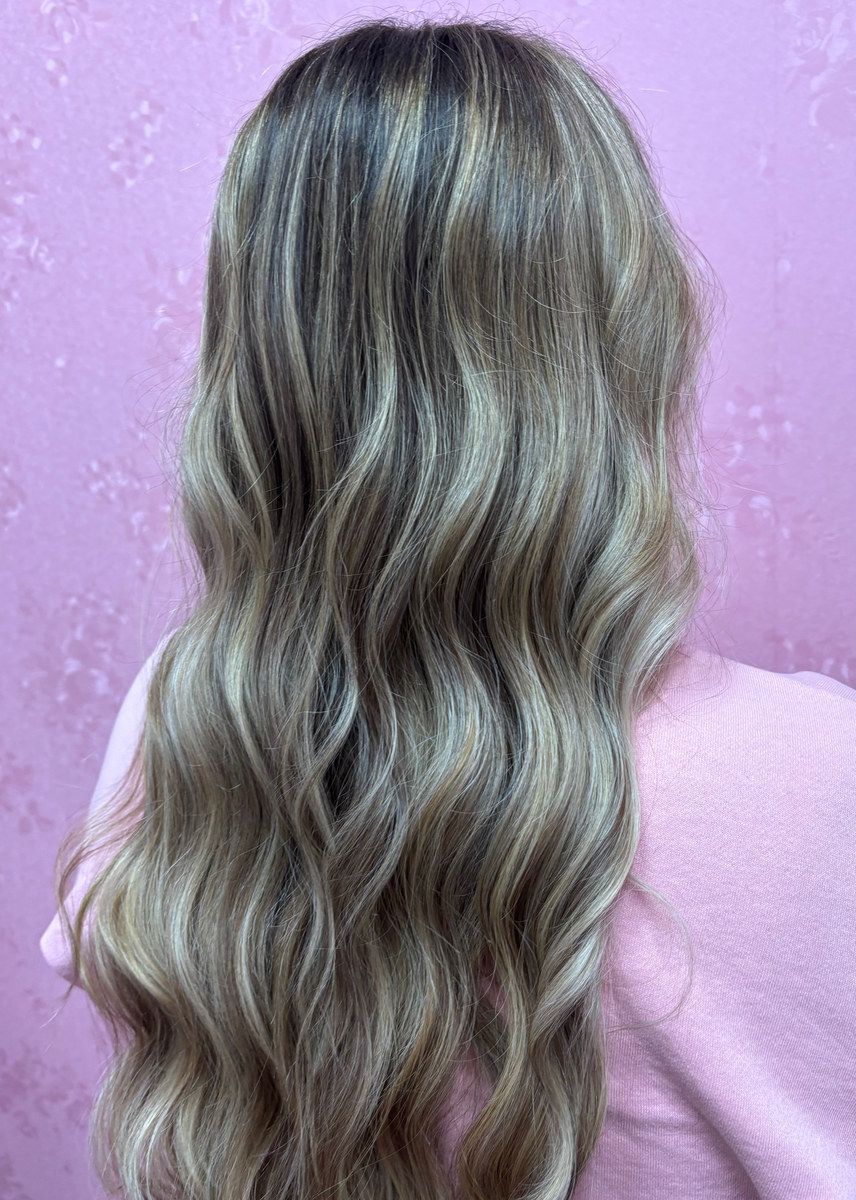
Bright, soft and dimensional. Beige, pearl, champagne and soft ash blondes tend to blend best with gray. Very golden tones can look brassy next to silver.
What to book
Ask about Partial Foil Highlight or Full Foil Highlight for highlights, or Hairline Blonding if gray mostly shows at the front and temples. Money piece and face-framing highlights explains how front placement softens gray at the hairline.
Option 3: blending with lowlights
Lowlights add darker pieces back into hair that's gone light or gray. They create depth so your hair doesn't look flat or washed out.
Who it's for
- You're mostly gray or very light and miss some depth
- You want to keep your gray but make it look more polished
- You already have highlights and the whole head looks too light
What to book
- Lowlights (Partial) is $120 on the current menu, about 2 hours
- Lowlights (Full) is $165, about 2 hours 30 minutes
Option 4: highlights and lowlights together
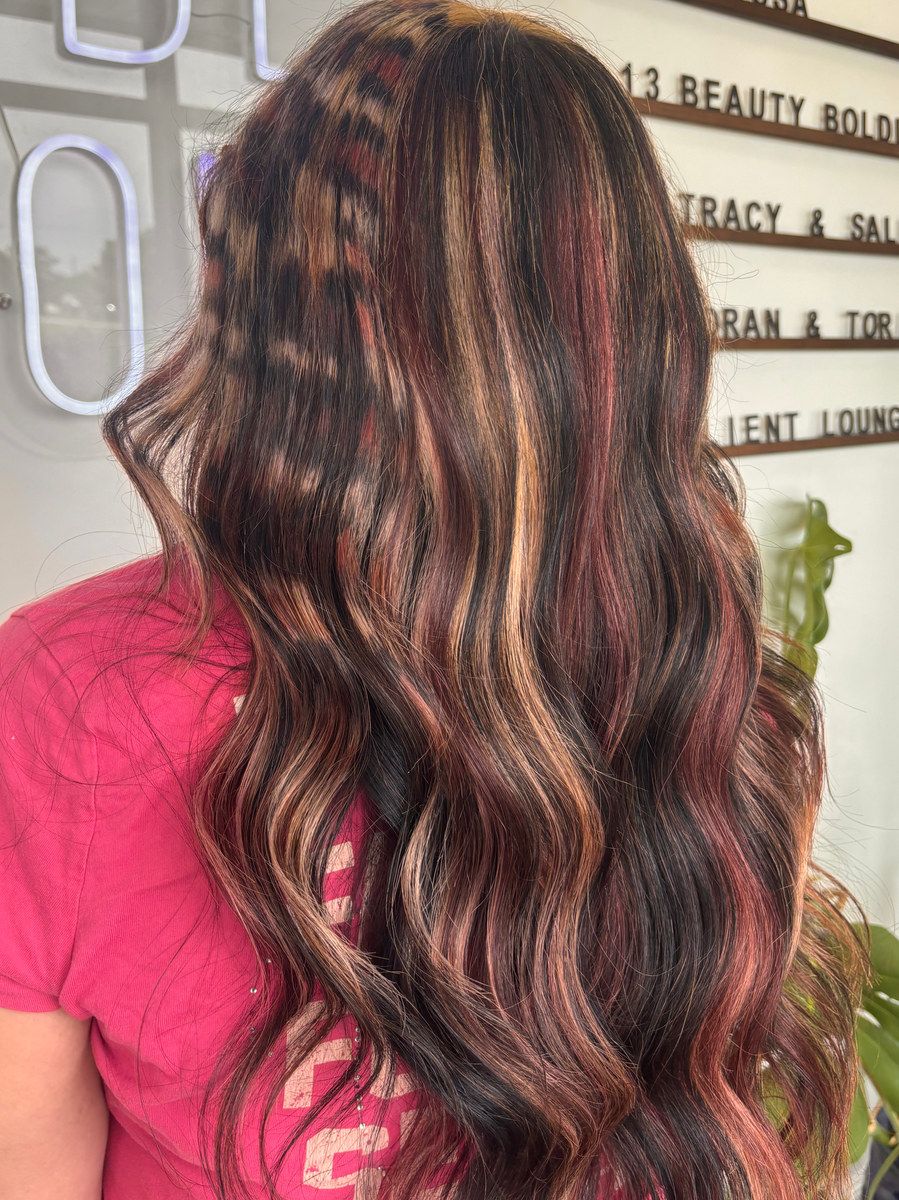
For many people, the most natural blend uses both. Highlights brighten and camouflage gray. Lowlights add back depth so the color doesn't look washed out. The result looks dimensional, like the color you'd see in naturally sun-touched hair.
On Hoshika's menu, Dimensional Color (Partial is $170, Full is $215 on the current menu) is the service for this mix of lighter and darker tones. A consultation helps decide which version fits.
Planning a transition
Moving from full coverage to blending
If you've been coloring all over for years and want less upkeep:
- Start with a consultation. Your stylist looks at how much gray you have and how much permanent color is built up on your lengths.
- Break up the line. Highlights and lowlights are added to blur the edge between colored ends and natural regrowth.
- Stretch the time. Over a few visits, you rely less on all-over color and more on dimension.
- Refresh tone. A Toner/Gloss ($45 on the current menu) keeps blended gray looking clean, not yellow.
Older permanent color can't simply be lifted out in one step, so a transition usually happens gradually. If you have box dye on your lengths, a test strand shows how your hair will respond first. Box dye color correction explains why built-up color takes time to change.
Going fully gray
If your goal is to grow out completely:
- Lowlights can soften the contrast between dark colored ends and silver roots while you grow
- Regular trims cut away old color bit by bit
- A shorter cut along the way can speed things up if you want it to
Moving from blending to full coverage
Some people try blending and decide they want solid color after all. That's a simpler switch. All Over Color can cover blended hair, then Root Retouches keep it even.
Caring for gray and blended hair
Gray hair can behave differently from your old hair, and blended hair needs care for both the gray and the lightened pieces.
- Fight yellowing. Gray and highlighted hair pick up warmth from sun, heat, hard water and some products. Use a purple shampoo a couple of times a week.
- Watch the hard water. Mineral buildup from hard water, common in Overland Park and much of Johnson County, can dull and yellow light hair. A chelating shampoo every week or two helps.
- Add moisture. Gray strands can feel dry or wiry. A weekly mask and a leave-in help.
- Protect from heat. Use heat protectant and lower heat; high heat can yellow light hair.
- Book a gloss before events. A Toner/Gloss adds shine and cleans up tone quickly.
How to keep blonde bright has a routine that works well for gray and blended hair too.
Questions to ask your stylist
- How much gray do I have, and where is it concentrated?
- Will blending or full coverage give me fewer appointments?
- What shade of highlight or lowlight will blend best with my gray?
- How many visits will a transition take?
- What will my color look like as it grows out?
What to ask your stylist has a full checklist for any color change.
Plan your gray blending with Hoshika
Hoshika colors one-on-one in her private studio in south Overland Park, inside Willow Salon & Suites on 135th Street. Whether you want full coverage, soft blending or a slow transition to your natural gray, the 15-minute consultation is free, and so is a test strand if you have color history to check.
See the full services menu for current pricing, or book a free consultation to talk through your options.
Frequently asked questions
Is gray blending cheaper than covering gray?
Per appointment it can cost more or less depending on the service, but blending usually means fewer visits because regrowth is less obvious. Over a year, many people find it easier to budget.
Can I stop coloring and go fully gray without cutting my hair short?
Yes. Highlights and lowlights can soften the line between your colored ends and natural gray while you grow it out, so you don't have to do a big chop unless you want one.
Why does my gray hair resist color?
Gray hair can be coarser or more tightly closed at the cuticle, so color sometimes has a harder time getting in. Your stylist adjusts the formula and processing to account for it.
Will highlights on gray hair turn yellow?
They can. Gray and lightened hair both pick up warmth from sun, heat, hard water and products. A toner or gloss and a purple shampoo used a couple of times a week keep it clean.
Book with Hoshika
Want this done for you?
Private one-on-one studio in Overland Park. Free consultations for big changes.