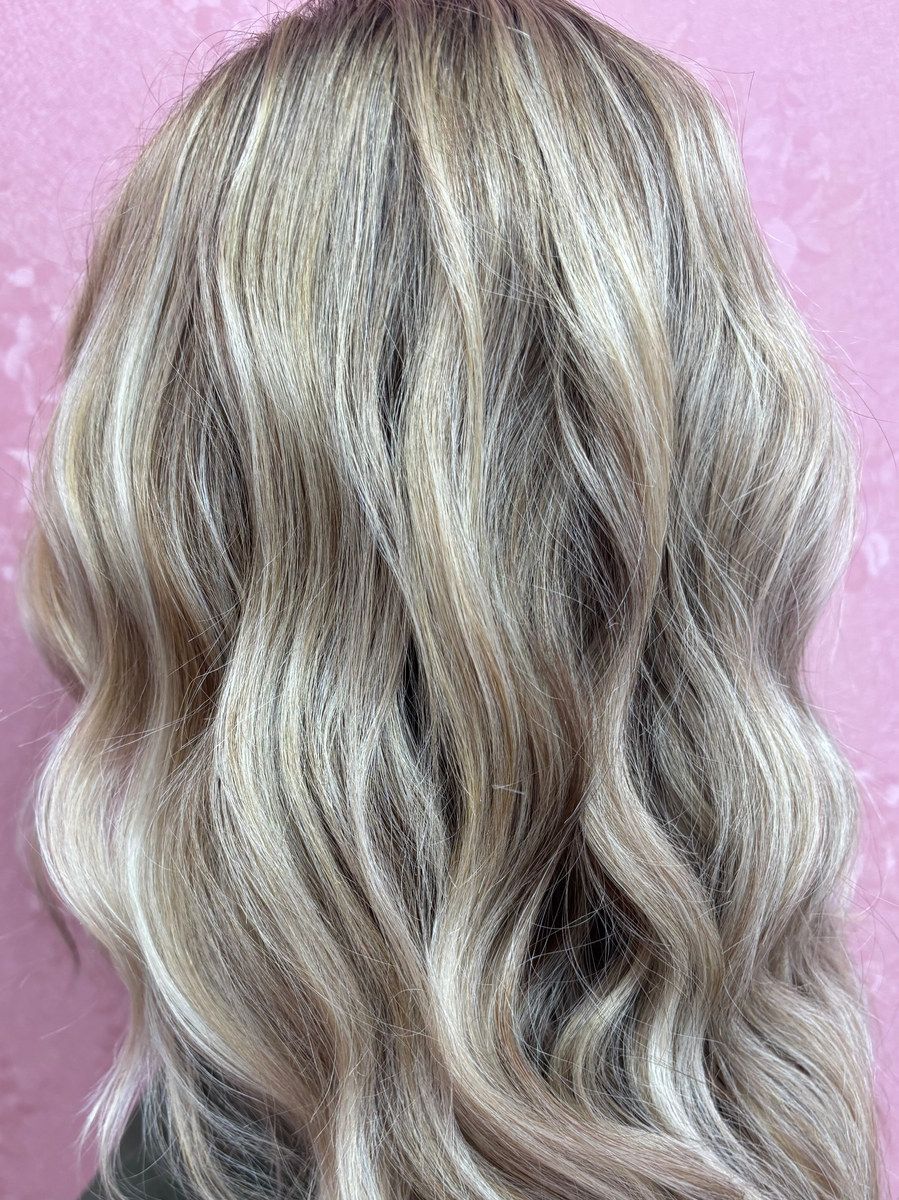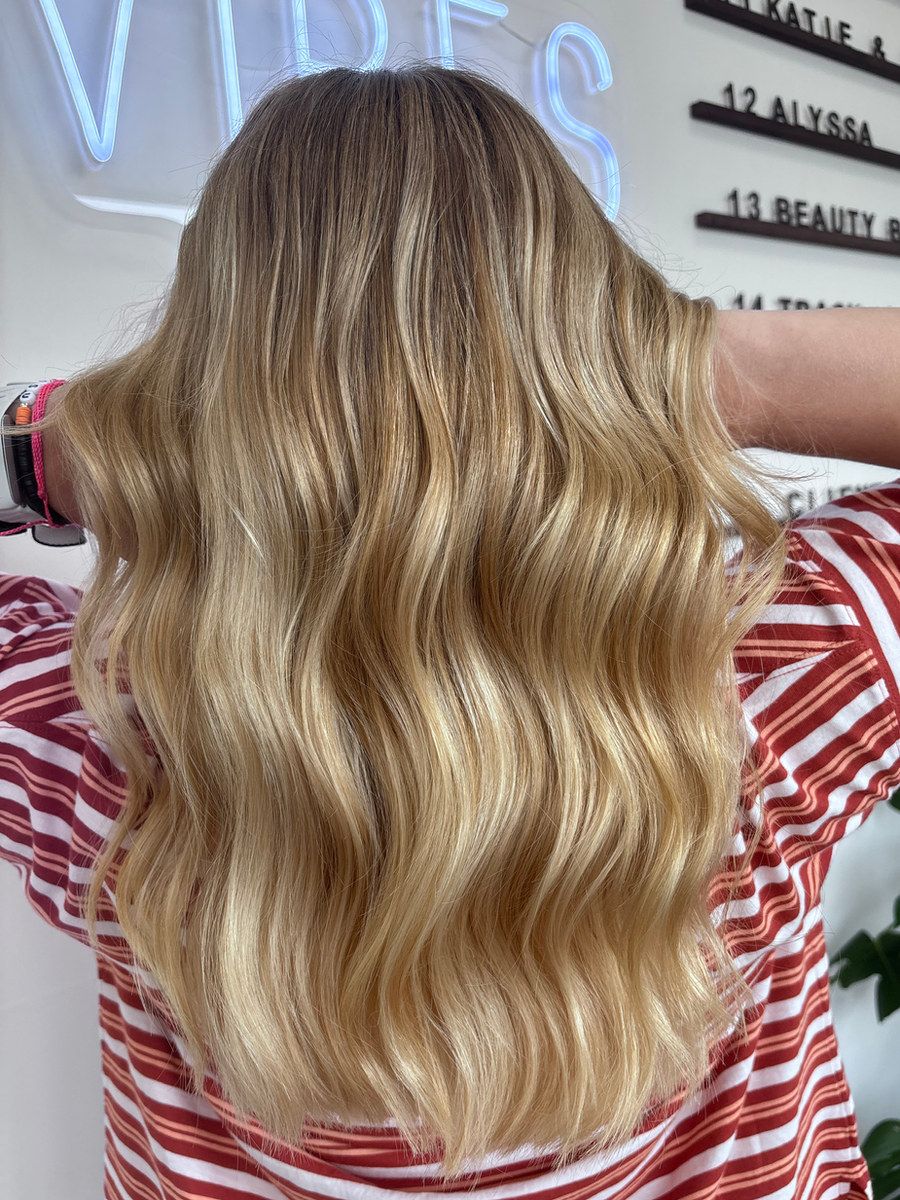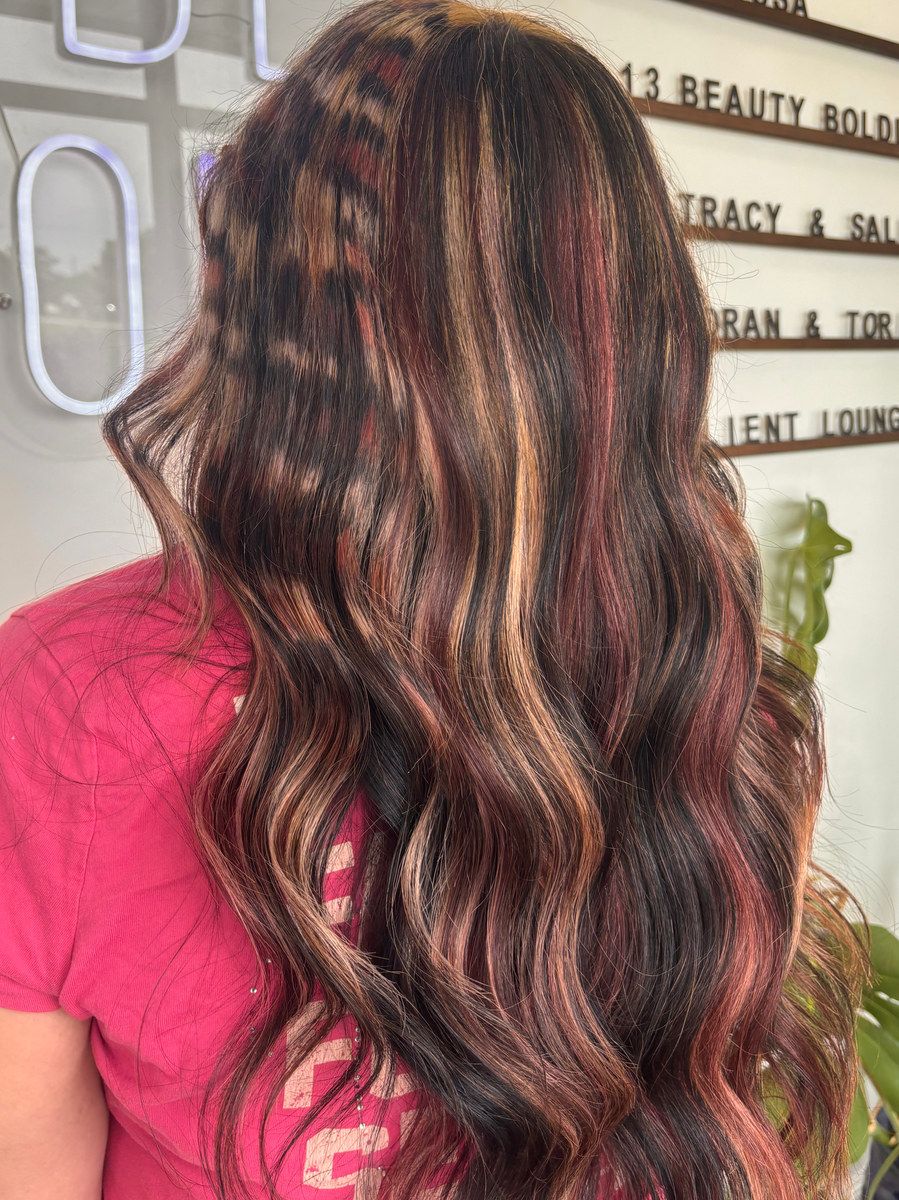
If you've been using box dye and now want lighter hair, you are looking at a color correction, not a regular highlight appointment. Box dye builds up in layers that don't lift evenly, so the goal is to remove or break down old pigment safely, then build the new color on top. It is very doable. It just takes planning, honesty about your hair history, and often more than one visit.
Why box dye is harder to lighten than natural hair
Natural hair lifts in a fairly predictable way. Lightener moves it through stages of warmth (red, orange, gold, yellow) until it reaches the level you want.
Box dye changes that in a few ways:
- It stacks. Every time you color your whole head, the ends get another coat. Your mid-lengths and ends may hold three, five, or ten layers of dye while your roots hold one.
- It's made to cover everyone. Store-bought color is formulated to work on as many people as possible, so it often deposits a lot of pigment. Dark shades especially sink in deep.
- It lifts unevenly. Because each section holds a different amount of dye, lightener can leave you with a bright root, an orange middle, and darker ends. Stylists call this banding.
- Dark dye is warm underneath. When you break down a brown or black box color, the warm pigment shows up first. That's why so many DIY lightening attempts end in brassy orange.
None of this means you're stuck. It means the process has to be slower and more controlled.
What a color correction actually involves
Every correction is different, but most follow the same basic path.
1. Consultation and hair history
This is where the real work starts. Your stylist needs to know everything that has touched your hair, including things you might not think count. Expect questions about how long you've been coloring, how often, which shades, and whether you've used anything other than standard box dye.
2. Test strand
A test strand is a small, hidden section of hair that gets lightened first. It shows how your hair reacts, how far it can lift, what color it lifts to, and whether it stays strong. It also flags any bad reaction from henna or metallic products before your whole head is involved. At Beauty, Boldly Done the test strand is free and takes about 45 minutes.
3. Removing or lifting old color
Depending on what the test strand shows, your stylist may use lightener, a color remover, or a mix of both. Lightening is usually done in sections, with the darkest, most built-up areas getting the most attention. A bond-building additive is often used to help protect the hair during the process.
4. Evening out the canvas
Once the old color has moved, the next job is making the result look even. That might mean lifting some sections more, or softening a too-bright root so it blends into the rest.
5. Toning
Toner (also called gloss) refines the shade. It can cut orange, soften yellow, or add richness. Toner doesn't lighten, so it can only work with the level your hair has reached.
6. A plan for the next step
If you're not at your goal yet, you leave with a plan: how long to wait, what to use at home, and what the next session will focus on.
Why it often takes more than one session
This is the part people don't want to hear, but it's the part that keeps your hair on your head. Hair can only handle so much lightener in one day. Push past that and it gets gummy, stretchy, and starts to break.
Here's a realistic look at what changes the timeline:
| Factor | Usually faster | Usually slower |
|---|---|---|
| Layers of box dye | One or two applications | Years of repeated all-over color |
| Starting shade | Light or medium brown dye | Dark brown, black, or blue-black dye |
| Goal shade | Soft caramel or bronde | Bright or icy blonde |
| Hair condition | Strong, elastic, not fried | Dry, gummy, already breaking |
| Hair history | Only standard box dye | Henna, metallic dye, or past lightening |
If your hair has held dark dye for years and you want platinum, plan on several sessions spaced a few weeks apart. If you have one layer of medium brown and want soft dimension, one appointment may get you there.
A good middle path many people like: go for a softer, warmer blonde first, enjoy it, and keep lifting gradually. You get a big change right away without risking your ends. Pieces placed with balayage or highlights can also blend leftover darker color instead of trying to erase it all at once.
What to bring and what to tell your stylist
Please be honest here. Stylists aren't judging you. They just need accurate information to keep your hair safe.
Tell your stylist about:
- Every box dye you've used and roughly when (photos of the boxes help a lot)
- Henna, "natural" or plant-based dyes, and color-depositing conditioners
- Any product labeled "progressive" or "gradual" color, which may contain metallic salts
- Past lightening, highlights, or a previous color correction
- Keratin smoothing treatments, perms, or relaxers you've had elsewhere
- Medications or health changes that have affected your hair
- How much heat you use each week
Bring:
- Two or three photos of your goal color
- A photo or two of colors you don't want (this helps just as much)
- A sense of your budget and how often you can come in
For a fuller checklist, see what to ask your stylist before a color change.
Budget and time: what to expect
Color correction is priced and scheduled differently than standard color because it's so variable. On the current Beauty, Boldly Done menu, color correction starts at $225 and is booked as a 4-hour appointment, with a consultation recommended first. The 15-minute consultation is free, and so is the test strand. See /services for the full, current menu.
A few honest notes on budgeting:
- "Starts at" matters here. Long, thick hair with heavy buildup may need more time and product than a shorter, finer head.
- Plan for more than one visit if your goal is very light. Budget for the full journey, not just day one.
- Toner is part of upkeep. Lightened hair usually needs a gloss refresh between color visits. A toner/gloss is $45 on the current menu.
- Home care is part of the cost. A good sulfate-free shampoo, a deep conditioner, and heat protectant help your result last.
Most KC-area salons price corrections by time, length, and density, so it's normal for quotes to vary. Compare what's included (test strand, toner, bond builder, follow-up plan), not just the number.
How to care for corrected hair
The weeks after a correction set you up for the next session. Treat your hair gently:
- Wash less often, with lukewarm water and a sulfate-free shampoo.
- Use a conditioning mask once a week.
- Turn your hot tools down and always use heat protectant.
- Use purple shampoo only when you see brassiness, not every wash.
- If you live in Overland Park, Leawood, Olathe, or Lenexa, mineral buildup from hard water can dull and warm up fresh color. Read about Johnson County hard water and your hair for a simple routine.
Our guide to keeping blonde bright covers the rest of the at-home plan.
What not to do
- Don't put another box color on top to "fix" a bad result before your appointment. Every new layer makes the correction harder.
- Don't try a DIY bleach bath or color remover first. You may end up with uneven patches that take longer to repair.
- Don't skip the test strand if you've ever used henna or a gradual color product.
- Don't expect icy blonde in one day from black box dye. A steady plan gets better, healthier results.
Start your correction with Hoshika in Overland Park
I work one-on-one in a private studio inside Willow Salon & Suites at 135th Street in south Overland Park, so your correction gets my full attention from start to finish. We'll start with a free consultation, run a free test strand, and map out a plan that fits your hair, your goal, and your budget. When you're ready, book a free consultation and bring your box dye history with you.
Frequently asked questions
Can box dye be removed in one appointment?
Sometimes, if there are only one or two layers of dye and your hair is healthy. Many corrections need two or more sessions spaced a few weeks apart so the hair stays strong enough to keep lifting.
Why does my hair turn orange when box dye is lightened?
Dark dye is built from warm pigments, and as lightener breaks it down the red and orange stages show first. A toner or gloss neutralizes some of that warmth, but how light you can go depends on how much dye will lift out.
Does henna or metallic dye really matter?
Yes. Some henna products and metallic salts can react badly with lightener, so your stylist needs to know before any chemical touches your hair. A test strand is the safest way to check.
How much does color correction cost at Beauty, Boldly Done?
Color correction starts at $225 on the current menu and is booked as a 4-hour block. The consultation and test strand are both free, and the full menu is on the services page.
Book with Hoshika
Want this done for you?
Private one-on-one studio in Overland Park. Free consultations for big changes.