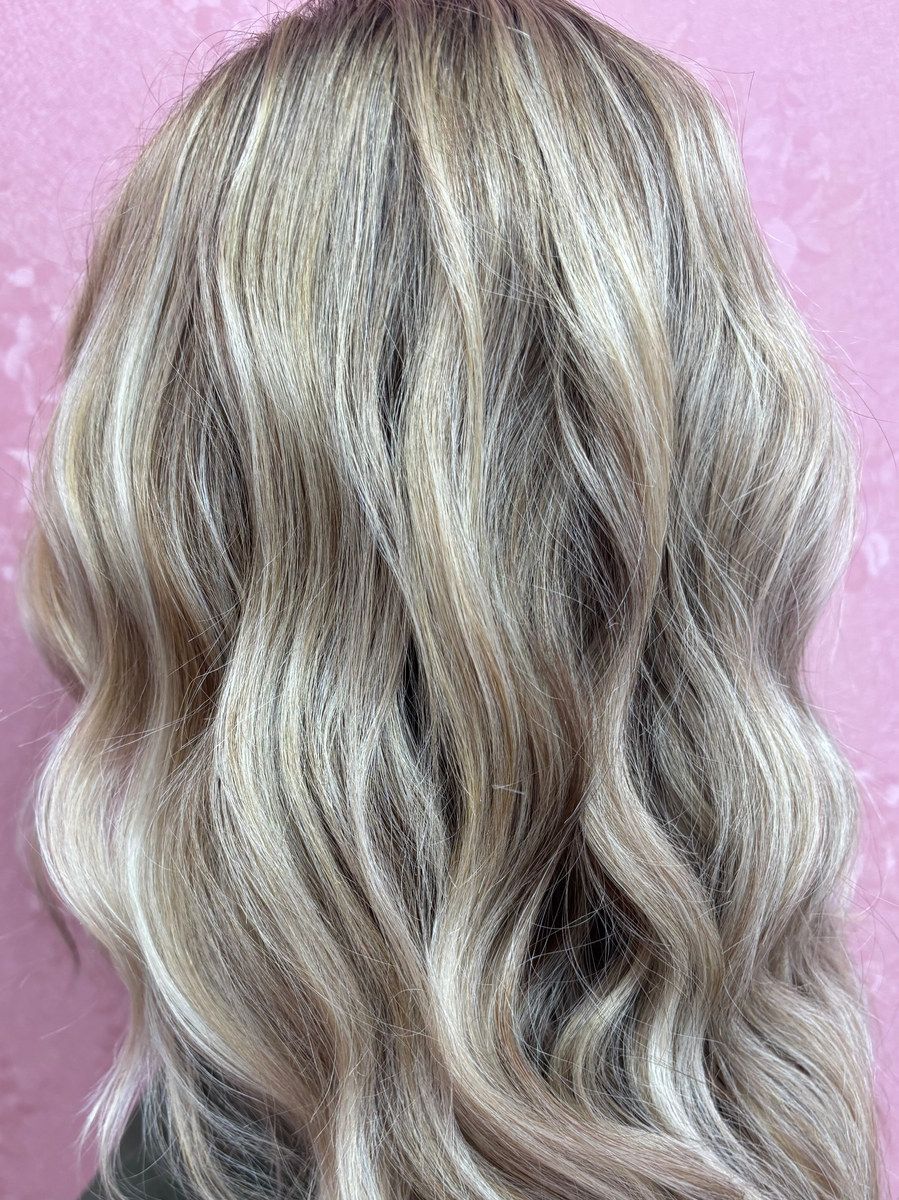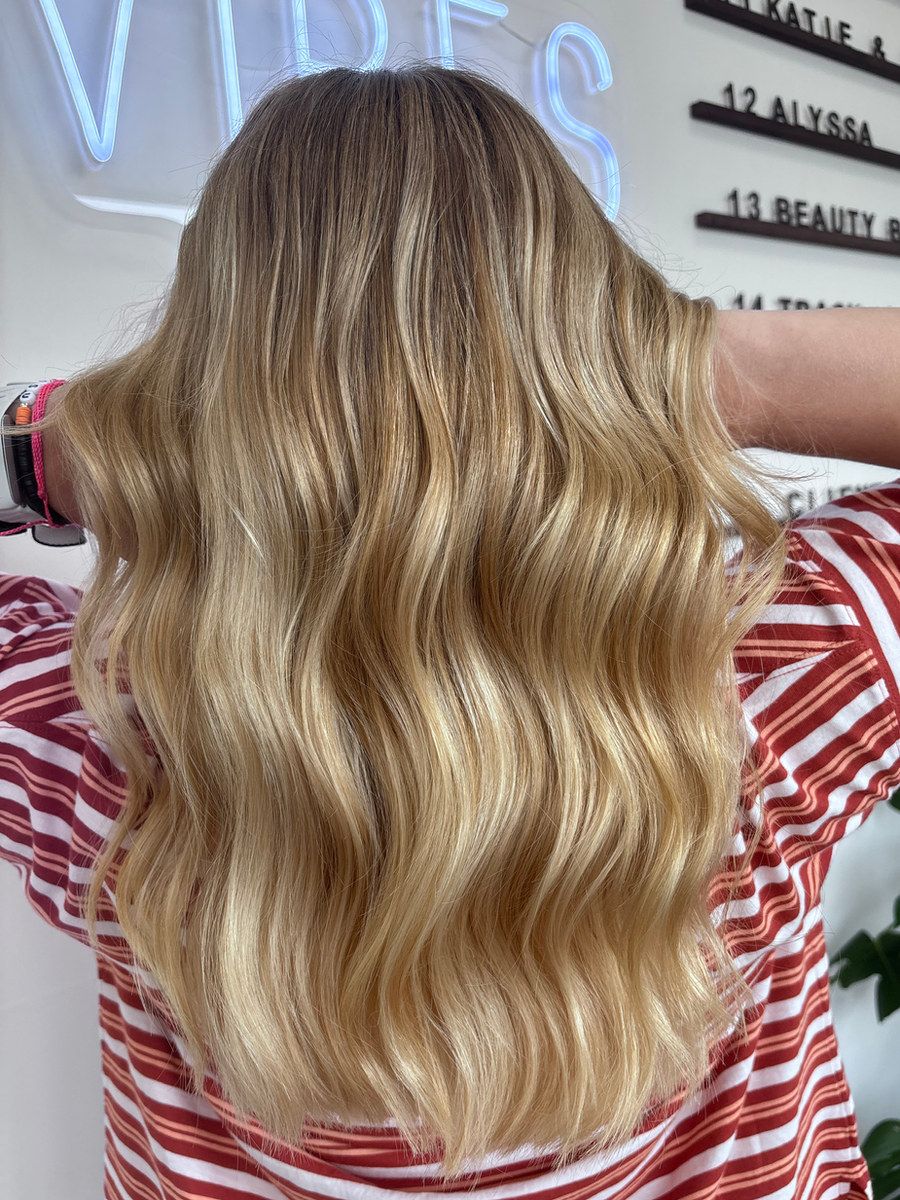
Hair color has its own vocabulary, and it can feel like your stylist is speaking another language. This glossary explains the terms you'll hear most during a consultation or color appointment, in plain English, from A to Z. Knowing them makes it easier to describe what you want and understand what's realistic.
A
All over color. One color applied from roots to ends, also called single process. It's used to go darker or richer, cover gray, or add shine. All Over Color is $110 on the current menu.
Ash. A cool tone with green, blue, or violet undertones that neutralizes warmth. Used to calm brassiness in blonde and brunette shades.
B
Babylights. Very fine, delicate highlights woven close together. They mimic the soft brightness of a child's naturally light hair and grow out softly.
Balayage. A freehand technique where lightener is painted onto the surface of the hair. It creates soft, sun-kissed brightness with a gentle grow-out. For a deeper comparison, see balayage vs highlights.
Banding. A visible stripe or line where one shade meets another, often from overlapping color or uneven application. It usually takes corrective work to blend.
Bleed. When color or lightener seeps outside its foil or section, leaving spots where they weren't planned.
Bond builder. A treatment added to lightener or used after color to help protect the hair's internal structure during chemical services. It supports strength but doesn't make damaged hair new again.
Brassiness. Unwanted orange or yellow warmth that appears as lightened hair fades or oxidizes. Toner and purple or blue shampoo help control it.
C
Color correction. Corrective work to fix uneven, unwanted, or overly dark color. It often takes more than one session and starts with a consultation. Our box dye color correction article explains the process.
Color melt. Blending two or more shades so the transition between them looks seamless, with no hard lines.
Cool tones. Shades with blue, green, or violet bases, like icy blonde or ash brown.
D
Demi-permanent color. Deposit-only color that doesn't lift natural pigment. It fades gradually and is often used for glossing, toning, and blending gray.
Developer. The activator mixed with color or lightener. Its strength affects how much lift and how fast the color works.
Dimensional color. A mix of lighter and deeper shades woven together so the hair has movement and depth instead of one flat color.
F
Foilyage. A hybrid of balayage and foils. Hair is painted like balayage, then wrapped in foil to boost lift. Good for brighter results with a soft grow-out.
Foils. Thin sheets used to separate and process sections of hair, often for traditional highlights.
G
Gloss. A deposit-only treatment that adds shine and refreshes tone. See toner, below.
Gray blending. Using highlights, lowlights, or demi-permanent color to soften the contrast of gray rather than covering it fully.
H
Hairline blonding. Brightening only the pieces around the face and part. Also called a money piece when it's concentrated at the front.
Highlights. Sections of hair lightened to be brighter than the base, usually placed with foils.
L
Level. How light or dark the hair is, usually on a scale from 1 (black) to 10 (lightest blonde). Level is different from tone.
Lift. How many levels lighter the hair becomes when lightener or high-lift color is applied.
Lightener. The product that lifts natural or artificial pigment out of the hair. Often called bleach.
Lowlights. Strands colored darker than the base to add depth, fullness, and contrast, especially in over-highlighted hair.
M
Money piece. Bright, face-framing sections at the front of the hair that make the face pop.
O
Oxidation. The chemical process that lets color develop. Also used loosely to describe how color shifts warmer over time.
Overlap. Applying color or lightener on hair that's already been processed. It can cause damage or banding.
P
Permanent color. Color that lifts and deposits at the same time and lasts until it grows out or is cut off.
Porosity. How easily hair absorbs and holds moisture and color. High-porosity hair grabs color fast and fades fast. Learn more in why your hair is hard to manage.
Processing time. How long color or lightener stays on the hair before rinsing.
R
Regrowth. New growth at the roots, showing your natural color.
Root retouch. Color applied only to new growth to match the rest of your hair. It keeps color fresh between bigger services.
Root smudge. Also called a root shadow or root melt. A softer, deeper shade at the roots blended into lighter lengths, so grow-out looks intentional.
S
Semi-permanent color. Deposit-only color that sits on the hair's surface and fades over several washes. Often used for vivids.
Single process. Another name for all over color.
T
Test strand. A small section of hair processed ahead of time to see how it lifts and holds color. Test strands are free on the current menu. Read what a test strand is for when you'd need one.
Tone. Whether a color looks warm, cool, or neutral. Two shades can be the same level but different tones.
Toner. A deposit-only color applied after lightening to refine or neutralize tone, like taking yellow blonde to beige or icy. A Toner/Gloss is $45 on the current menu.
U
Underlying pigment. The warm tones (red, orange, yellow) revealed as hair is lightened. Every lightening service has to account for it.
V
Virgin hair. Hair that has never been colored, lightened, or chemically treated. It usually lifts more evenly and predictably than previously colored hair.
Vivids. Bright fashion colors like pink, blue, purple, and teal. They usually need prelightening and fade faster than natural shades.
W
Warm tones. Shades with gold, copper, or red bases, like honey blonde or auburn.
How to use this glossary at your consultation
You don't need to use the right words. Bring photos of colors you love and colors you don't. Then share your hair history: past color, box dye, henna, and treatments. Your stylist will translate it into a plan. A Client Consultation is free and takes about 15 minutes.
Talk color with Hoshika in Overland Park
I'm happy to explain every step of your color plan, from the level we're lifting to the toner we finish with. Questions are welcome. I'm in south Overland Park at 135th Street, inside Willow Salon & Suites. Book a free consultation and bring your inspiration photos.
Frequently asked questions
What does hair color level mean?
Level describes how light or dark hair is, usually on a scale from 1 (black) to 10 (lightest blonde). It says nothing about warmth or coolness; that's tone.
Is toner the same as gloss?
They overlap. Both are deposit-only color, and many salons use the words together. Toner usually refers to correcting or refining tone, while gloss emphasizes shine and refresh.
What is banding in hair color?
Banding is a visible stripe or line of a different shade, often from overlapping color on previously colored hair or uneven grow-out. It usually needs correction to blend.
Why does my stylist ask about my hair history?
Past color, box dye, henna, and treatments all affect how hair lifts and takes new color. An honest history helps avoid surprises and damage.
Book with Hoshika
Want this done for you?
Private one-on-one studio in Overland Park. Free consultations for big changes.