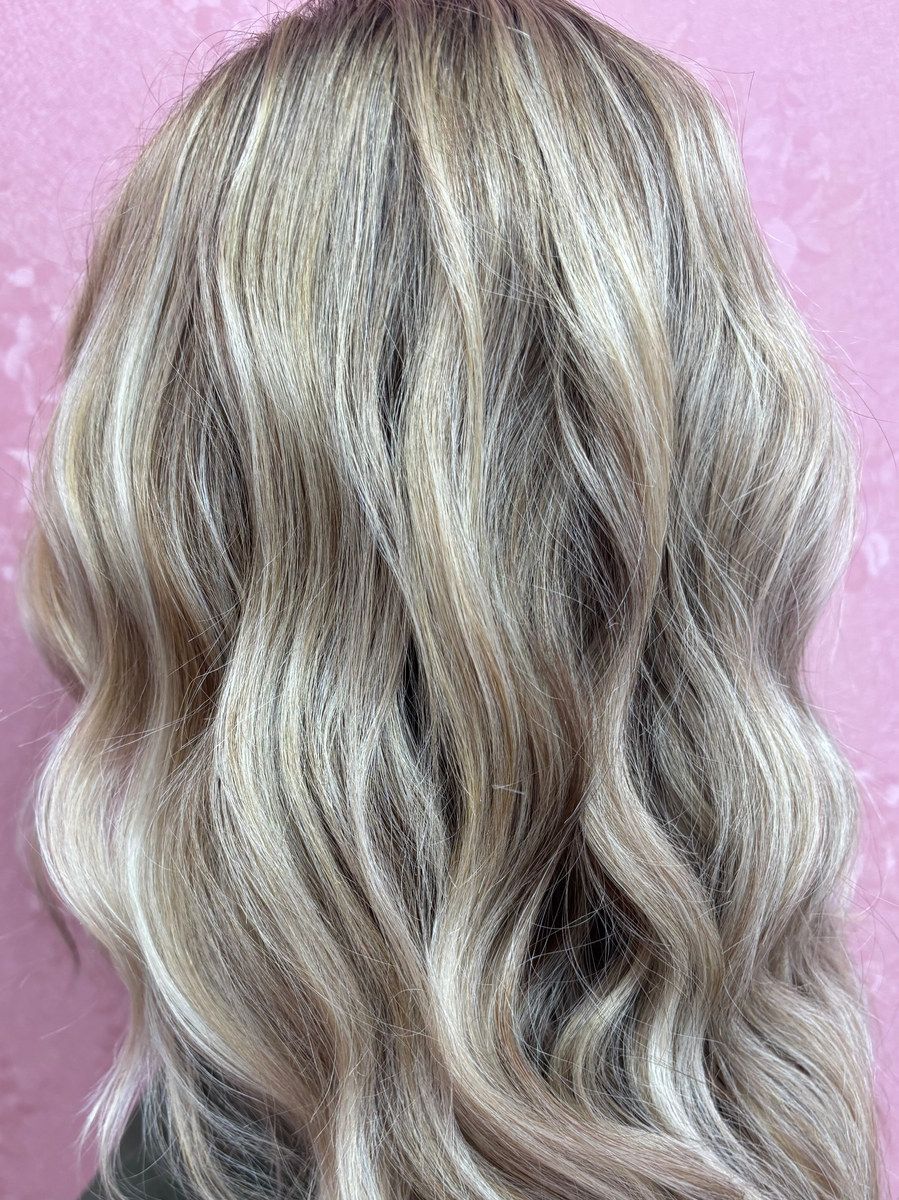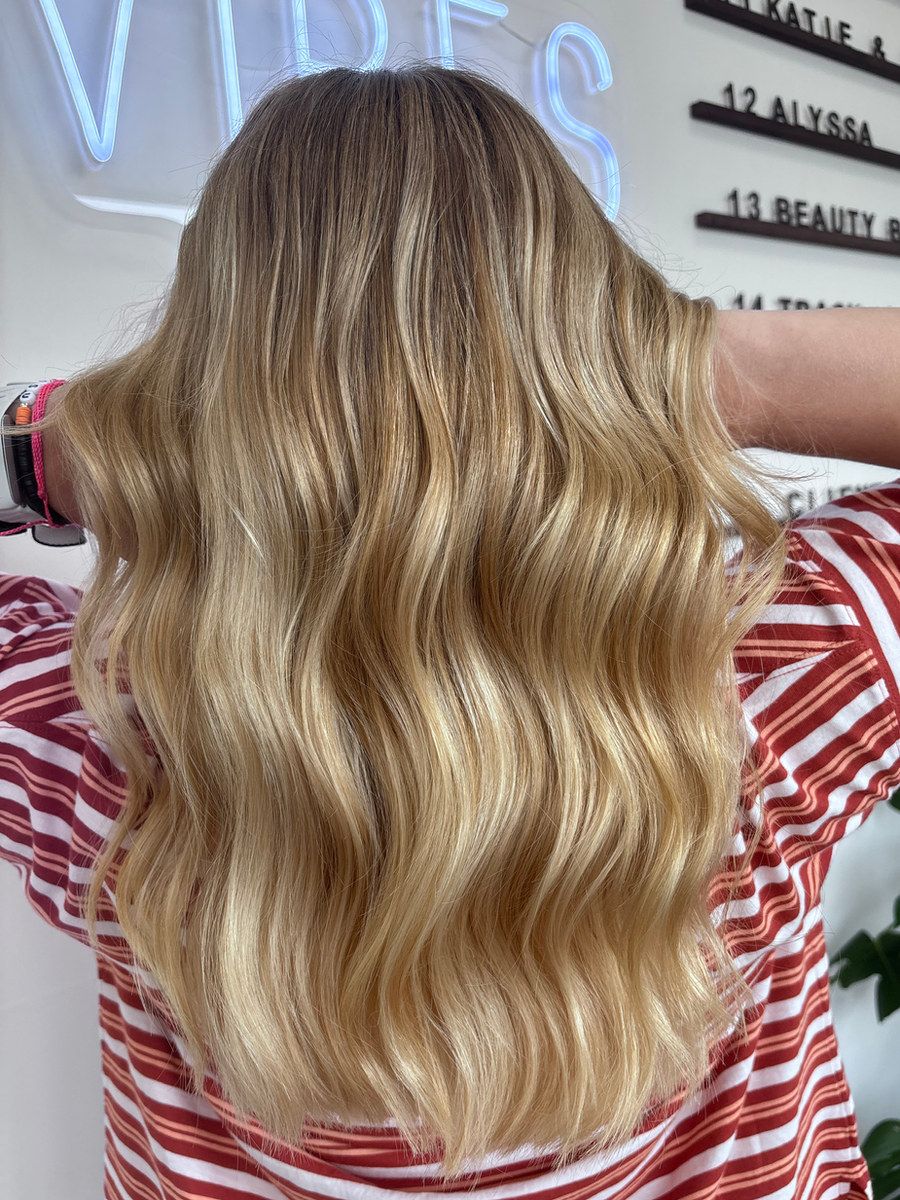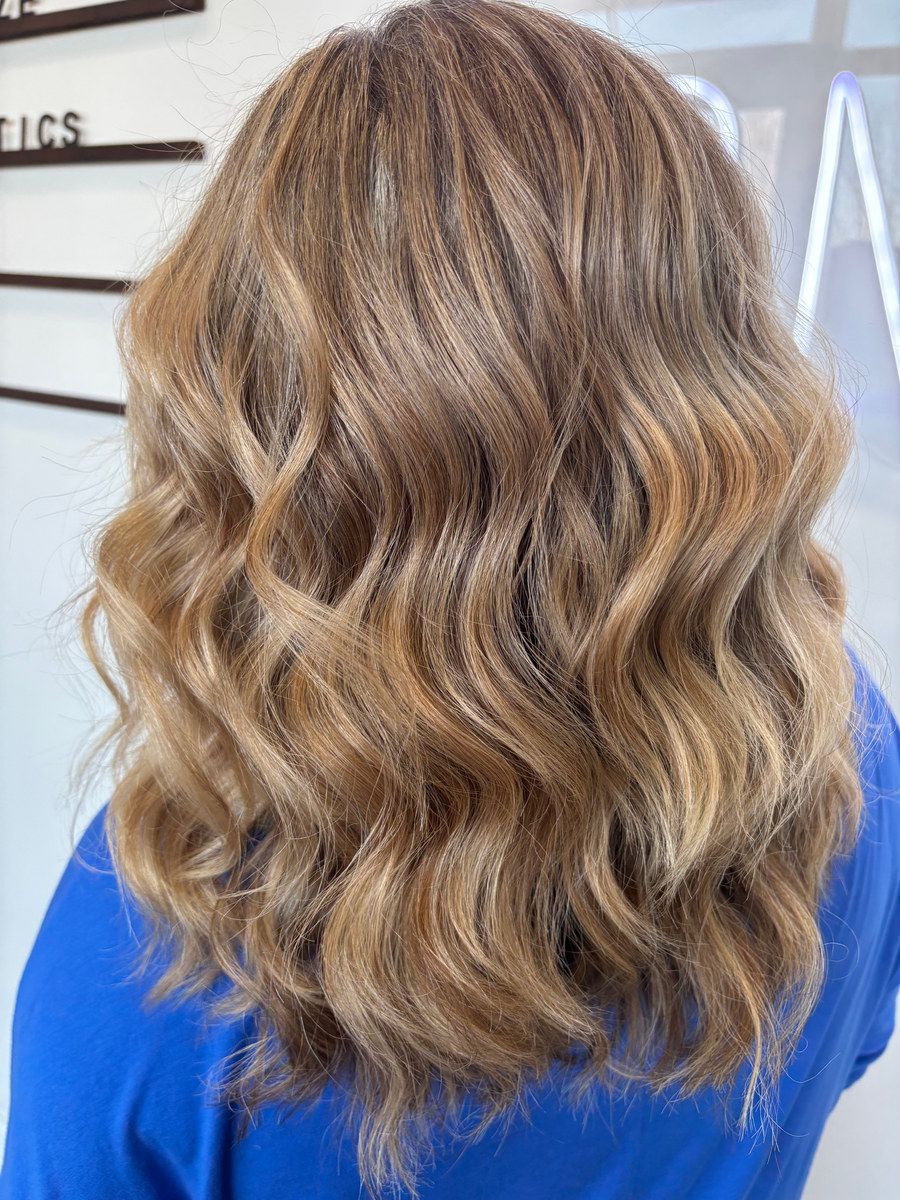
Layers change how your hair moves, where it holds volume and how much styling it needs. The right layering depends less on the trend and more on your texture, density and how you actually wear your hair. Here are the most-requested layer styles, who each one suits, how much upkeep they need and how to ask for exactly what you want.
Layers at a glance
| Style | Look | Best for | Styling effort |
|---|---|---|---|
| Long layers | Soft movement through the length | Most textures, especially medium to thick | Low |
| Face-framing layers | Shorter pieces around the face | Almost everyone | Low to medium |
| Butterfly cut | Short crown and face layers, long underneath | Medium to thick, straight to wavy | Medium |
| Blunt / one-length | Solid, even perimeter | Fine to medium, straight | Low |
| Shag | Choppy, textured layers all over | Wavy and curly, thick hair | Low to medium |
Long layers
Long layers start well below the chin and are cut through the mid-lengths and ends. They remove some weight, add movement and help curls or waves fall more evenly.
Who it suits: Medium to thick hair that feels heavy or flat at the bottom. Also good for growing out length, since the layers are subtle.
What it looks like day to day: Air-dries with gentle movement. A round brush or curling iron adds bounce at the ends.
Upkeep: Low. The shape grows out softly. For timing, see how often you should get a haircut.
Face-framing layers
Face-framing layers are shorter pieces around the front that lead into longer hair. They can start at the cheekbones, chin or collarbone.
Who it suits: Almost everyone. It's the easiest way to add shape without losing length. Great if you mostly wear your hair down and want brightness near your face, especially paired with a money piece.
What it looks like day to day: The front pieces need a quick blow-dry or a flat-iron bend to fall away from the face. Air-dried, they're softer and more undone.
Pairs with: Curtain bangs blend naturally into face-framing layers. See how to style curtain bangs.
Butterfly cut
A butterfly cut uses noticeably shorter layers around the crown and face, blended into longer lengths underneath. When styled, the short layers flip out and up, which gives lift at the top and a full, bouncy shape. Grown out or air-dried, it reads as a long, layered cut.
Who it suits: Medium to thick hair, straight to wavy. Fine hair can work with softer, fewer short layers so the ends don't look thin.
What it looks like day to day: It shines with a blowout, rollers or a round brush. Without styling, the short layers can look flatter or piecey.
Upkeep: Medium. The short layers lose their shape first.
Blunt or one-length
A blunt cut has little or no layering, so every strand ends at about the same line. It makes hair look thicker at the ends.
Who it suits: Fine to medium, straight hair that you want to look fuller. Also great for sleek, polished styles. Thick, wavy hair can feel heavy and triangular in a fully blunt cut, though a few invisible internal layers can help.
What it looks like day to day: Sleek and simple. A flat iron makes it look sharp. A few waves make it look relaxed.
Upkeep: Low to medium. The line is easy to see grow out, so ends need tidying to stay crisp.
If your hair is fine, fine hair volume tips pairs well with this style.
Shag
A shag uses lots of choppy layers all over the head, with more volume at the crown and lighter ends. It's often paired with bangs.
Who it suits: Wavy and curly hair, and thick hair that needs weight taken out. On very fine, straight hair, a shag can look thin unless it's adjusted to a softer version.
What it looks like day to day: Built for air-drying with a little texture spray or curl cream. It looks best a bit undone.
Upkeep: Low to medium. A shag grows out into a long layered cut, which many people like.
Choosing by texture
- Fine, straight hair: Blunt or long, minimal layers. Face-framing pieces are fine. Avoid too many short layers.
- Thick, straight hair: Long layers or a butterfly cut to remove weight and add movement.
- Wavy hair: Long layers, a butterfly or a soft shag, depending on how much volume you want.
- Curly hair: Layers that spread volume evenly. Tell your stylist whether you wear it curly or straight most of the time.
- Coarse or frizz-prone hair: Layers placed to remove bulk without creating short, puffy pieces.
If you're not sure what your texture, density or porosity are, why your hair might be hard to manage explains how to tell.
How to ask for layers
Words like "layers" mean different things to different people. Make it concrete:
- Bring photos of cuts you like, and one or two you don't. Look for photos of people with hair texture similar to yours.
- Show where the shortest layer should start. Point to your cheekbone, chin or collarbone.
- Say how much length you want to keep. "I want to keep my length" and "take off a few inches" lead to very different cuts.
- Describe how you style it. Do you air-dry, blow-dry or flat-iron most days? How much time do you have?
- Mention what bugs you now. Flat at the top, heavy at the bottom, puffy at the sides, too thin at the ends.
For a full pre-appointment checklist, see what to ask your stylist.
Which haircut service to book
On Hoshika's menu, the Haircut (Wash and Style) is $55 and takes about 1 hour 15 minutes. It's the one to book for a new layered shape, since your hair is washed, cut and styled so you can see how the layers fall. A Basic Haircut is $25 and takes about 1 hour, a good fit for maintaining a shape you already have.
Get your layers cut by Hoshika
I cut one-on-one in my private studio inside Willow Salon & Suites on 135th Street in Overland Park. We'll look at your texture, talk about how you style your hair and decide where your layers should fall before I pick up the scissors. Book your haircut and bring your inspiration photos.
Frequently asked questions
Will layers make my hair look thinner?
Too many short layers on fine hair can. Long, minimal layers or a blunt cut usually keep fine hair looking fuller, while thick hair often looks lighter and better shaped with more layering.
Can you get layers on curly hair?
Yes. Curls often look best with layers that spread volume evenly so the shape isn't triangular. Tell your stylist how you usually wear your curls so they can cut for that.
How do I grow out layers?
Keep up regular trims that take the longest lengths down a little while letting the shorter layers catch up. It's slower than skipping trims but keeps the shape from looking uneven.
What's the difference between a butterfly cut and long layers?
Long layers are soft and spread through the length. A butterfly cut has noticeably shorter layers around the face and crown blended into longer lengths, which gives more lift and a fuller, bouncier shape.
Book with Hoshika
Want this done for you?
Private one-on-one studio in Overland Park. Free consultations for big changes.