Fine hair gets more volume from three things working together: a cut that keeps weight at the ends, lightweight products used in the right spot, and a blow-dry that lifts the root instead of flattening it. Color can add the look of thickness, and extensions are an option when density is the real problem. Here's how to put each piece in place.
First, figure out what you're working with
"Fine" and "thin" get used as if they mean the same thing. They don't.
- Fine hair means each strand is narrow. It feels soft, gets weighed down fast, and struggles to hold a curl.
- Thin hair (low density) means there are fewer strands on your head. You may see more scalp, especially at the part.
- Fine and dense is common. You have lots of strands, but each one is delicate, so the hair still goes flat.
Why it matters: fine but dense hair mostly needs lighter products and better technique. Fine and low-density hair may also need a smarter cut, color tricks or added hair. If you're not sure which you have, why is my hair so hard to manage? walks through simple ways to check texture, density and porosity.
Cuts that build volume
The cut does most of the work. A good one gives fine hair a shape that holds even on lazy days.
Keep a strong perimeter
Fine hair looks fullest when the ends are blunt or close to it. Heavy texturizing and razor work can leave ends wispy and see-through. Ask for a solid baseline with only light texture.
Use layers carefully
- Long, soft layers add movement without taking too much weight away
- Internal or "invisible" layers remove a little bulk underneath so the top can lift
- Face-framing pieces add shape around the face where people actually look
- Avoid lots of short choppy layers if your hair is fine and thin; they can make the ends look sparse
Think about length
Fine hair often looks thicker at shoulder length or shorter, because there's less weight pulling it flat. That doesn't mean you have to cut it short. Long fine hair can look great with a blunt line and regular trims to keep the ends from going thin. How often should you get a haircut? covers timing by length and goal.
Try a part change
Flipping your part to the other side, or moving from a center to a side part, lifts the root right away because the hair is fighting its usual direction. It's free and takes seconds.
Products: light, targeted, and less of them
Fine hair goes flat from too much product as often as from too little.
| Product | Where to use it | Tip |
|---|---|---|
| Volumizing shampoo | Scalp | Focus on the scalp; let the rinse clean the ends |
| Lightweight conditioner | Mid-lengths to ends only | Keep it off the roots |
| Root lift spray or mousse | Damp roots | A golf-ball amount of mousse is plenty for most fine hair |
| Heat protectant | All over, before heat | Choose a light spray over a heavy cream |
| Dry shampoo or texture spray | Dry roots and mid-lengths | Adds grip so styles hold |
| Light hairspray | Finished style | Mist from a distance |
A few more habits help:
- Skip heavy oils and butters near the roots. If your ends need oil, use a drop or two.
- Clarify now and then. Product and mineral buildup weigh fine hair down. In much of Johnson County the tap water is hard, which adds to that film. A chelating shampoo every week or two lifts mineral buildup.
- Condition every wash anyway. Fine hair still needs moisture; it just needs the right placement.
The blow-dry that changes everything
Air-drying is often where fine hair goes flat. A quick, focused blow-dry can make a big difference.
- Towel-blot gently. Squeeze water out instead of rubbing.
- Apply heat protectant and root lift. Spray protectant all over, then mousse or lift spray at the roots only.
- Dry the roots first. Flip your head upside down, or lift sections straight up, and dry the root area against the direction it naturally falls.
- Rough-dry to mostly dry. Use your fingers until the hair is nearly dry.
- Finish with a round brush. Take a few larger sections on top and at the crown, lift them up and away from the scalp, and dry with the nozzle pointed down the hair shaft for smoothness.
- Set it. Hit each section with the cool shot before you release it. Velcro rollers on the crown while you do makeup add even more lift.
- Finish light. A little texture spray at the roots, a mist of hairspray, and you're done.
How to get a salon blowout at home has a full section-by-section guide.
Go easy on the heat
Fine strands heat up faster than thick ones, so they're easier to damage. Use a medium setting on dryers and irons, always use protectant, and don't pass over the same section again and again. How to use heat protectant explains what it does and how much to use.
Color tricks for visual volume
Color can make fine hair look fuller without adding a single strand.
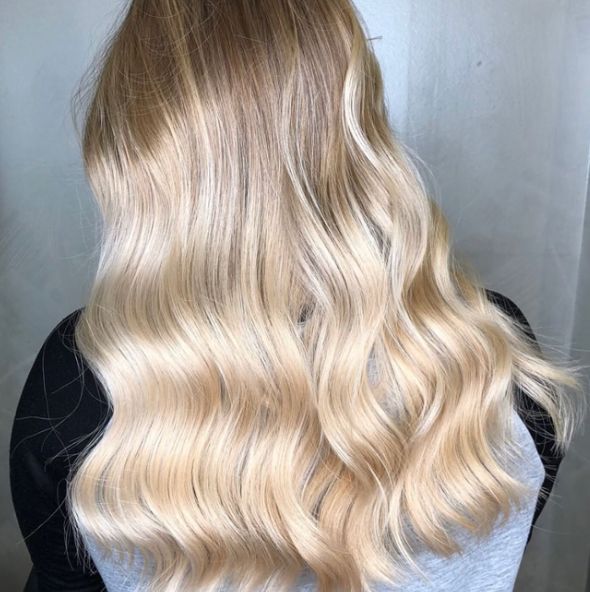
- Dimension reads as depth. Lighter and darker tones side by side create the look of movement and thickness. Flat, one-tone color can make fine hair look thinner.
- Darker roots help. A softer, slightly deeper root makes the scalp less noticeable at the part, especially on fine blonde hair.
- Face-framing brightness draws the eye to the front and adds shape, so the overall look reads fuller.
- Avoid over-lightening. Very heavy lightening on fine hair can leave it fragile and see-through at the ends. A soft, blended placement is usually kinder.
Services worth asking about include Dimensional Color, Lowlights, Balayage and Hairline Blonding. A consultation helps pick the right one for your density and how much upkeep you want.
When extensions make sense
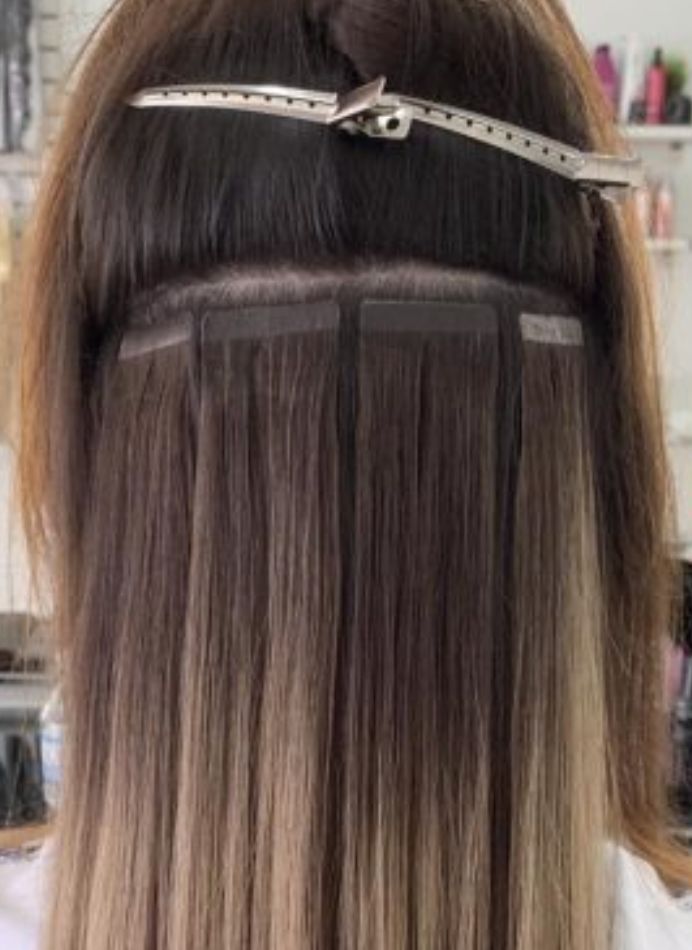
Sometimes no cut, product or blow-dry fixes the real issue: there just isn't enough hair. Extensions can add both length and fullness.
Extensions may be worth a look if:
- Your ends look sparse no matter how often you trim
- You want more length but your hair thins out as it grows
- You want fullness for an event or a season and are ready for the upkeep
With fine hair, the method and amount of hair matter a lot. Too much weight can strain fine strands, and some attachment points are harder to hide in very fine hair. That's why extensions start with a consultation. K-tip vs. tape-in vs. sew-in extensions compares the three methods side by side.
Quick habits that keep volume going
- Wash at night and sleep on a loose top knot for second-day lift
- Use a satin pillowcase to reduce friction and flat spots
- Don't touch your hair constantly; oils from your hands weigh it down
- Rotate your part every few days
- Book trims before your ends get wispy, not after
Get more volume with Hoshika in Overland Park
Hoshika works one-on-one in her private studio in south Overland Park, inside Willow Salon & Suites on 135th Street. A Haircut (Wash and Style) is $55 on the current menu, and a Shampoo & Blowout is $45 if you want to see a lifting blow-dry done on your own hair. Extensions are request-to-book and start with a free 15-minute consultation, with hair purchased separately and color-matched.
Check the full services menu for current pricing, or book a free consultation and talk through a plan for your fine hair.
Frequently asked questions
Is fine hair the same as thin hair?
Not quite. Fine describes the width of each strand, while thin usually means low density, or fewer strands on your head. You can have fine hair with lots of density, and the approach changes depending on which one you have.
Do layers make fine hair look thinner?
Too many short layers can take away weight your ends need, which makes them look see-through. A few long or internal layers usually add movement without thinning the perimeter.
Can I use dry shampoo on clean hair for volume?
Yes. A light mist at the roots on clean, dry hair adds grip and lift. Use a small amount and brush it through so it doesn't leave residue.
What extensions are best for fine hair?
It depends on your density, scalp and lifestyle, so it's a consultation question. The goal is a method that blends well and doesn't put too much weight on fine strands.
Book with Hoshika
Want this done for you?
Private one-on-one studio in Overland Park. Free consultations for big changes.