A move-up is the maintenance visit that keeps extensions sitting close to your scalp as your natural hair grows. Removal is taking them out completely and safely. Both are part of wearing extensions, and skipping or rushing them is where most extension damage starts. Here's what each one involves, the signs it's time, and why neither should happen at home.
What a move-up is
When you get extensions installed, each attachment sits a small distance from your scalp. Your hair keeps growing, so every week the bond, tape or braid travels a little farther down the hair shaft.
At a move-up, your stylist takes those attachments out, cleans everything up and puts them back near the root. The goal is to reset the install so the weight is held on a short, strong section of your hair again.
Why move-ups matter
Once attachments sit low, a few things start to happen:
- More leverage on your hair. The extension hangs from a longer piece of your own hair, which can strain the strand.
- Matting at the root. The space between your scalp and the attachment collects shed hair and tangles.
- Visible attachments. Lower tapes, bonds and braids are more likely to show when you move or style.
- Uneven blending. The extension length shifts down, so the blend into your own layers changes.
Signs you're due
You don't need to count weeks to know. Watch for these:
- You can feel space between your scalp and the attachments.
- Tapes or bonds peek out when you part your hair or tie it back.
- Brushing at the root takes longer and catches more.
- Small knots or mats form right above the attachment.
- Your extensions feel heavier or swing differently.
- A sew-in track feels loose or the weft has shifted.
If you see knots forming at the root, book sooner rather than later. A small tangle is easy to work out. A mat that's been left for weeks is not.
What happens at a move-up, by method
The basic steps are the same: remove, clean, check, reapply. The details depend on how your extensions attach.
| Method | What happens at the move-up |
|---|---|
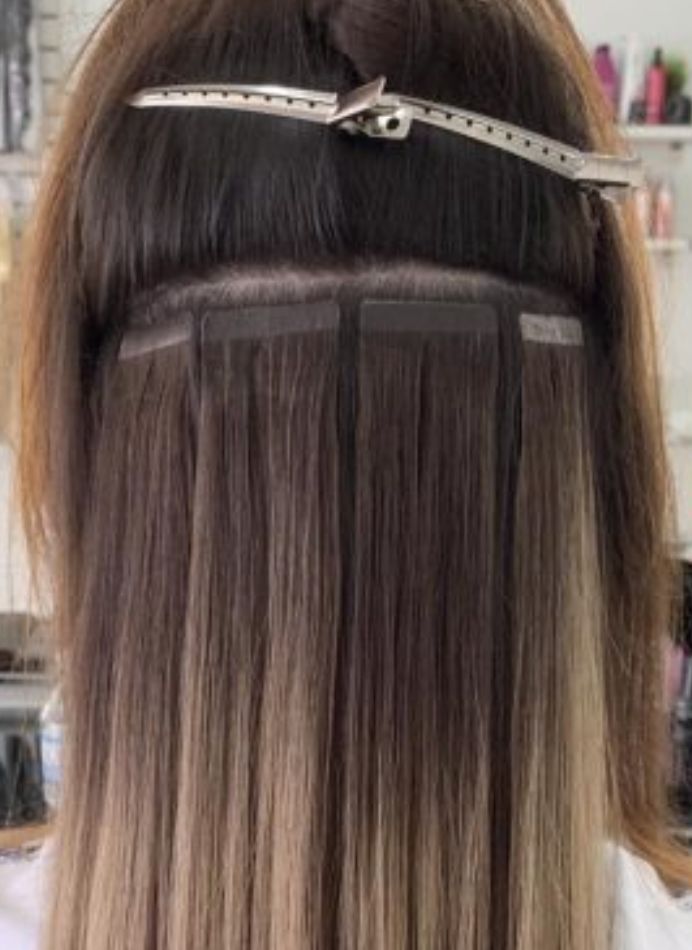
| Tape-in | Adhesive remover releases the wefts, residue is cleaned out, wefts are re-taped and reapplied near the root |
| K-tip (fusion) | Grown-out bonds are softened and removed, shed hair is cleared, and strands are re-bonded close to the scalp, usually with new keratin tips |
| Sew-in | Thread is cut, wefts come off, the old braid is taken out, hair is washed and detangled, a fresh braid is made and wefts are sewn back on |
Between removal and reapplying, your stylist checks your natural hair and scalp for breakage, tension or irritation. It's also a good moment to adjust placement, add or remove hair, or tweak the blend.
The Move Up service starts at $100 on the current menu and is listed at about 4 hours, varying by method. See the Move Up service page. For more on each method's cycle, read the guides to tape-in extensions, K-tip extensions and sew-in extensions.
What happens at removal
Removal takes the extensions out completely, with no reapplication. It looks a lot like the first half of a move-up, but the finish is your own hair.
- Release. The right remover or technique is used for your method: adhesive remover for tapes, bond remover for K-tips, careful thread cutting for sew-ins.
- Slide out. Attachments come out gently, without pulling.
- Clear shed hair. Trapped shed hair is combed out from the root area.
- Detangle. Your hair is worked through from the ends up.
- Wash. A thorough wash removes residue and any leftover product.
- Check. Your stylist looks at your hair and scalp and talks through next steps.
The Removal service starts at $100 on the current menu and is listed at about 2 hours, varying by method. See the Removal service page.
About the shed hair
The amount of hair that comes out at removal surprises almost everyone. It's mostly normal daily shedding that couldn't fall out because it was held in place by the attachment. It is not the same as breakage. Your stylist can show you the difference: shed hairs are full length with a small white bulb at one end, while broken hairs are short pieces without one.
Why you should never remove extensions yourself
At home, the usual approach is to pull, cut or peel. Each one can cost you your own hair:
- Peeling tapes without remover can lift your hair out along with the adhesive.
- Cutting at the bond or braid makes it easy to snip your natural hair, sometimes close to the root.
- Pulling K-tip bonds strains or snaps the section of hair inside the bond.
- Brushing out a matted root without first loosening it can tear a whole cluster of hair.
The extra hair lost this way can take a long time to grow back, and it usually shows as short broken pieces around the crown and nape. Professional removal is the cheapest way to protect the hair you started with.
Keeping the time between visits easy
Good daily habits make your next move-up faster and gentler:
- Brush gently twice a day, holding the hair at the root
- Separate bonds or check tape lines with your fingers daily
- Never sleep on wet hair; wear a loose braid on silk or satin
- Keep oils and conditioner away from attachments
The hair extension care guide and how to sleep with extensions cover these routines in detail.
After removal: giving your hair a reset
If you're taking a break, plan a little care for your natural hair. A trim cleans up any thin or uneven ends. A gentle, moisturizing routine for a few weeks helps your hair recover. If you plan to go back to extensions later, your stylist can tell you when your hair looks ready.
Book your move-up with Hoshika
I handle move-ups and removals one-on-one in my Overland Park studio inside Willow Salon & Suites on 135th Street. If you're not sure whether you're due, send a photo or come in for a free consultation and I'll take a look. Book your next visit before your attachments slip too low.
Frequently asked questions
How often do I need an extension move-up?
It depends on your method and how fast your hair grows. Your stylist sets a schedule at install and adjusts it based on how your attachments look at each visit.
Can I reuse my extension hair at a move-up?
Often, if it has been cared for. Tape-in and sew-in wefts are commonly cleaned and reapplied, while K-tip hair is usually re-bonded. Your stylist will check its condition first.
Why is there so much hair after my extensions come out?
You shed hair every day, and with extensions some of it stays trapped at each attachment instead of falling out. That collected shed hair comes out all at once at removal, which can look like a lot.
Is it okay to take a break between sets of extensions?
Yes. Many people take a break after removal to let their hair rest, get a trim and do a treatment. Your stylist can check how your hair looks and suggest timing.
Book with Hoshika
Want this done for you?
Private one-on-one studio in Overland Park. Free consultations for big changes.