K-tip extensions, also called fusion extensions, are small strands of hair with a keratin tip that are bonded one at a time to tiny sections of your natural hair. They take the longest to install, but they move the most like your own hair and give you the most freedom to style. If you want length and fullness you can wear up, down or parted anywhere, K-tips are worth understanding. Here is how they work, what the day looks like and how to care for them.
What "K-tip" and "fusion" mean
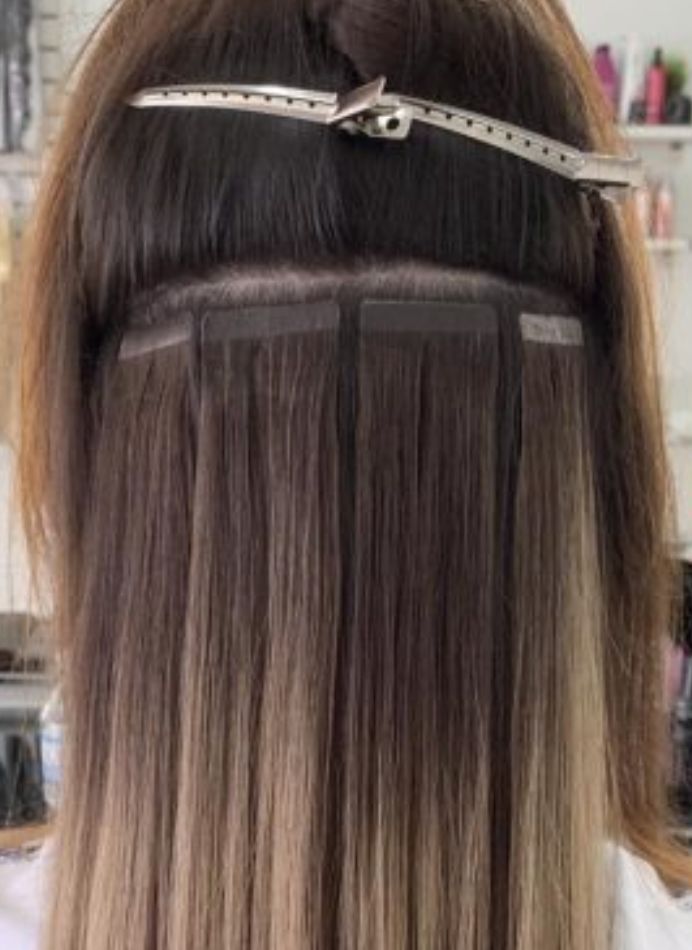
The "K" stands for keratin, the same protein your hair is made of. Each extension strand has a small keratin tip at the top. During the install, a heat tool softens that tip so it can be wrapped and rolled around a very small section of your own hair. As it cools, it forms a tiny, firm bond.
Because the bond is fused around your hair, the method is called fusion. Each bond holds one small strand, and dozens to many dozens of them are placed in neat rows. The final count depends on how much fullness and length you want and how dense your own hair is.
If you're still weighing methods, the K-tip vs. tape-in vs. sew-in comparison lays them out side by side.
Who K-tips suit
K-tips are often the best fit if you:
- Wear your hair up a lot. Small, individual bonds hide easily in ponytails and half-up styles.
- Want a very natural blend. Hair moves strand by strand, not in panels.
- Like to change your part. There are no wide wefts to work around.
- Want longer stretches between maintenance. Each bond grows out with a single small strand, so K-tips generally go longer between move-ups than wefted methods.
- Can set aside a long first appointment.
They may not be ideal if your hair is extremely fine and fragile, if your scalp is very oily, or if you love heavy oils and serums at the root. Your stylist will check the strength of your natural hair at the consultation before recommending them.
What happens at the install
The K Tip (Fusion) Extensions service is $300 plus the cost of the hair on the current menu, and it's listed at about 5 hours. Extension services are request-to-book, and the hair is purchased separately and color-matched at your consultation. Details are on the K Tip (Fusion) Extensions service page.
Here is roughly how those hours are spent:
- Prep. Your hair is washed with a clarifying shampoo and dried fully with no conditioner or product at the root, so the bonds can grip.
- Mapping. Your stylist plans rows that stay below your part and away from the hairline so bonds stay hidden.
- Sectioning each bond. Tiny, even squares of hair are separated. Even sizing matters: too small strains your hair, too large looks bulky.
- Bonding. One strand at a time, the keratin tip is softened and rolled around your section.
- Checking. Bonds are checked for comfort and spacing as the rows build up.
- Cut and blend. The extension hair is cut into your natural hair so the length looks like it grew there.
Bring a snack, a charged phone and something to watch. A long appointment is easier when you plan for it.
How K-tips feel day to day
For the first few nights you may notice the bonds when you lie down. That usually fades within the first week or so as your scalp adjusts. After that, most people say K-tips feel like a fuller version of their own hair.
What you will notice:
- Movement. Hair falls and swings naturally because there are no panels.
- Small bumps at the root. You can feel the bonds with your fingers, but they shouldn't be visible.
- Weight. Longer, fuller installs add some weight. Your stylist balances that against what your hair can comfortably carry.
Caring for K-tip bonds
Keratin bonds are sturdy, but a few things break them down faster:
| Avoid | Why |
|---|---|
| Oils, serums and conditioner at the root | They soften keratin and loosen bonds |
| Flat iron or curling iron on the bonds | Heat can soften the keratin again |
| Sleeping with wet hair | Wet bonds tangle and mat at the root |
| Skipping daily brushing | Shed hair collects at the bond and forms knots |
| Very hot water at the scalp | It can soften bonds and dry the extension hair |
Good habits are simple. Brush gently from the ends up while holding the hair at the root. Separate the bonds with your fingers once a day so they don't stick together. Keep conditioner from mid-length down. For the nighttime routine, see how to sleep with hair extensions, and for the full routine see the hair extension care guide.
Kansas City's dry winters can make extension hair feel brittle, since it doesn't get oil from your scalp. A leave-in on the ends, kept well away from the bonds, helps.
Move-ups and maintenance
As your hair grows, bonds move down from the scalp. Shed hair (your normal daily shedding) collects at each bond and needs to be cleared. At a maintenance visit, grown-out bonds are removed and the hair is re-bonded closer to the root, usually with new keratin tips. Your stylist will set the timing based on your growth and how the bonds are holding.
If you want to know when you're due and what happens at that visit, read extension move-ups and removal explained.
Removal
K-tip removal always belongs in the salon. A bond remover is applied to soften the keratin, then each bond is gently broken down with a tool and the strand slides out. Shed hair trapped at the bond is combed out after. It's normal to see a small amount of shed hair at removal, because it has been held in place since the install.
The Removal service starts at $100 on the current menu and is listed at about 2 hours, varying by method. See the Removal service page. Pulling or cutting bonds out at home is the fastest way to damage your natural hair.
Is it worth the longer appointment?
If you want extensions that let you live your normal life, with ponytails, parted hair and lots of movement, the long install pays off over months of wear. If you mainly want quick volume for a season, a shorter method may suit you better. That's a decision worth making together at a consultation.
Plan your K-tips with Hoshika in Overland Park
I install K-tips one-on-one in my private studio inside Willow Salon & Suites on 135th Street, so the whole appointment is focused on you. At your free consultation we'll check whether your hair can carry the length you want, pick and color-match your hair, and plan your install day. Book your free consultation and we'll map it out.
Frequently asked questions
Do K-tip extensions hurt?
The install itself shouldn't hurt. Many people feel slight tightness at the root for the first few nights while they adjust, which usually fades as the bonds settle.
Can I wear my hair up with K-tips?
Yes. Because each bond is small and placed individually, K-tips are one of the most flexible methods for ponytails, half-up styles and changing your part.
Can K-tip extensions be colored?
Extension hair can sometimes be toned or deposited, but it doesn't lift the same way your own hair does. It's best to settle your color first and match the extension hair to it at your consultation.
Why is the K-tip appointment so long?
Every strand is bonded by hand to its own small section of your hair. That careful, one-at-a-time placement is what makes K-tips blend so naturally, and it takes time.
Book with Hoshika
Want this done for you?
Private one-on-one studio in Overland Park. Free consultations for big changes.