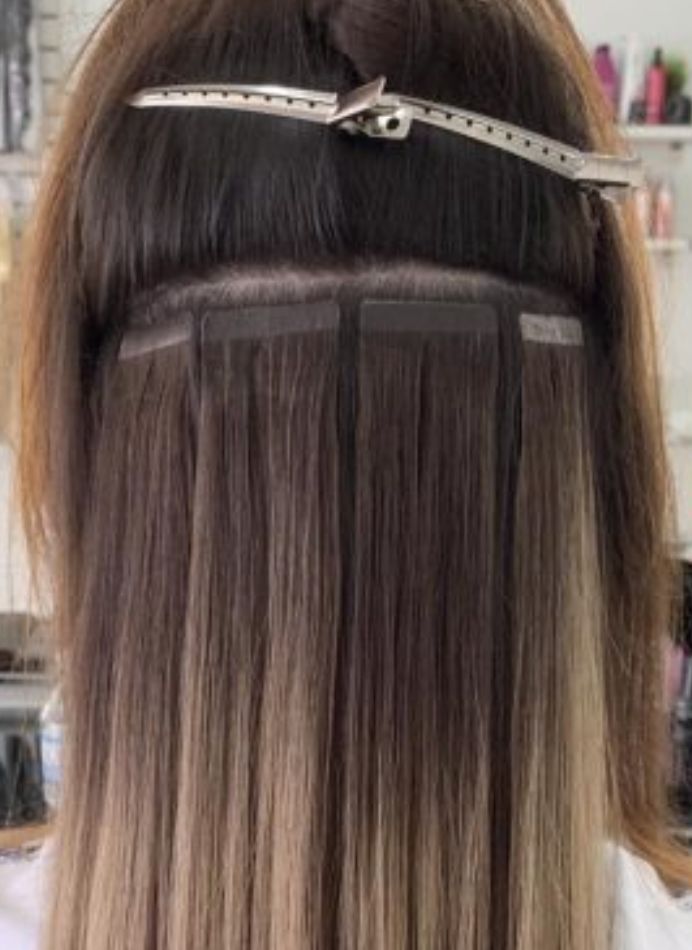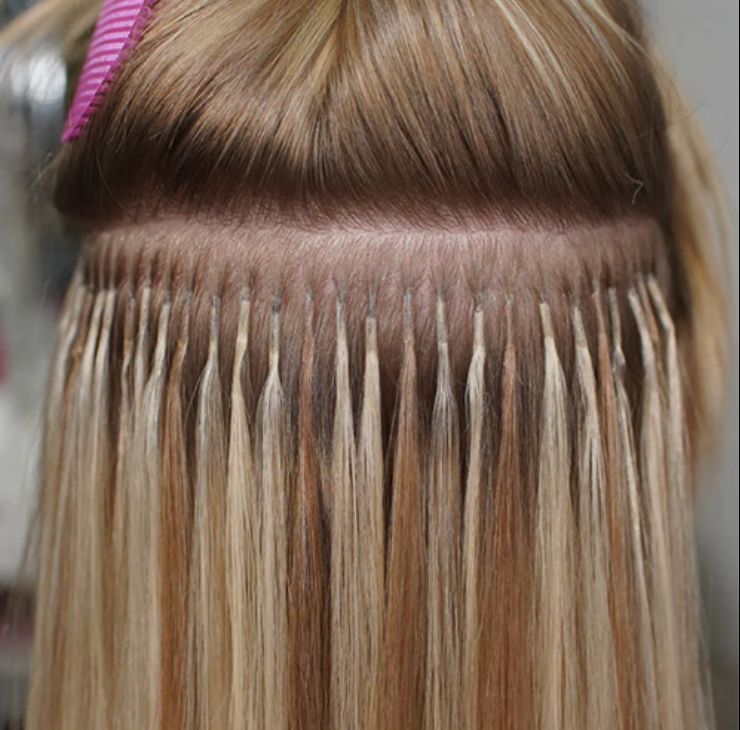
To wash hair with extensions, brush out tangles first, wash standing upright so water flows down the hair, massage shampoo into your scalp between the attachments, keep conditioner off bonds and tapes, then dry the roots completely. The basics are the same for K-tip, tape-in, and sew-in extensions, but each method has one or two specific things to watch. This guide gives you the general routine and then the details for each.
Always follow the aftercare your stylist gives you after install, including how long to wait before your first wash.
Before you wash: brush out
Never get extensions wet while they're tangled. Water tightens knots, and knots near the root turn into matting.
- Use a soft loop brush or an extension-safe brush.
- Hold the hair near the root with one hand to support the attachments.
- Start at the ends and work up in small strokes.
- Gently separate any bonds or tapes that have stuck together with your fingers.
The general wash routine
What you need
- A gentle, sulfate-free, moisturizing shampoo
- A conditioner or mask for the lengths only
- A microfiber towel or soft cotton T-shirt
- A wide-tooth comb or extension brush
- A heat protectant for the lengths
Step by step
- Stand upright in the shower. Let water run down your hair, not across it. No flipping your head forward.
- Wet thoroughly. Extension hair can be dense. Make sure the water reaches your scalp.
- Dilute your shampoo. Mix a small amount with water in your palm or a bottle. Diluted shampoo spreads between attachments more easily and rinses cleaner.
- Wash the scalp with your fingertips. Massage between rows or bonds using gentle downward motions. Don't scrub in circles. That causes tangling around attachments.
- Let the suds rinse through the lengths. You don't need to scrub extension hair. Rinsing carries enough shampoo through.
- Rinse thoroughly. Leftover shampoo at the root can make hair feel heavy and attachments slip.
- Condition mid-lengths to ends only. Keep conditioner and masks well below the attachments.
- Detangle with conditioner in. Use a wide-tooth comb from ends up, supporting the root.
- Rinse with cool or lukewarm water. Very hot water isn't kind to adhesives or extension hair.
Products to keep off bonds and tapes
Most extension trouble comes from the wrong product in the wrong place.
| Product | Why it's a problem near attachments | Where it's fine |
|---|---|---|
| Oils and serums | Can break down tape adhesive and soften keratin bonds | Ends only, small amount |
| Heavy conditioners and masks | Make attachments slip | Mid-lengths and ends |
| Silicone-heavy products | Coat attachment points and can loosen them | Ends, sparingly |
| Alcohol-heavy sprays | Can dry out bonds and the hair around them | Keep away from the root |
| Clarifying or very stripping shampoos | Can dry extension hair, may affect adhesives | Ask your stylist before using |
If you live in Johnson County, hard water can leave mineral buildup that dulls extension hair over time. Talk to your stylist before reaching for a strong clarifying or chelating shampoo, and see how Johnson County hard water affects hair for background.
Method-specific tips
K-tip (fusion) extensions
K-tips are attached with small keratin bonds.
- Keep oils and conditioner off the bonds. This is the biggest rule.
- Separate bonds after washing. Run your fingers along the rows so bonds don't stick together as they dry.
- Dry the bonds first. Point the dryer at the root area on low or medium heat before drying the lengths. Bonds left damp are more likely to slip.
- Don't use a hot tool on the bonds. Heat is what sets the bonds during install, so high heat near them can soften and loosen them.
Tape-in extensions
Tape-ins sit flat in sandwiches against your scalp.
- Wait before the first wash. The adhesive needs time to set. Your stylist will tell you how long.
- Keep every oily product away from the tapes. Oil is the fastest way to make tapes slide.
- Wash gently between the rows. Use fingertips and downward strokes. Don't scratch at the tapes.
- Dry the tape area fully. Hold a section up and aim the dryer at the tape rows on a gentle setting.
Sew-in extensions
Sew-ins are wefts stitched onto braids, so your scalp and braids need extra attention.
- Use a nozzle applicator bottle. Apply diluted shampoo directly along the braid lines to clean the scalp.
- Rinse very thoroughly. Leftover shampoo in braids can cause itching and buildup.
- Dry the braids completely. This is the most important step. Braids under a weft can stay damp for a long time. Use a dryer on the braid lines, or sit under a hooded dryer if you have one. Damp braids can lead to odor and scalp irritation.
- Don't skip the scalp. A clean, comfortable scalp makes a sew-in much easier to live with.
Not sure which method you have, or which might suit you? See K-tip vs. tape-in vs. sew-in extensions.
How to dry hair with extensions
Drying is where a lot of damage happens.
- Squeeze, don't rub. Wrap the hair in a microfiber towel or cotton T-shirt and press out the water.
- Apply heat protectant to the lengths. Keep it off the attachments. Here's how to use heat protectant correctly.
- Dry the roots and attachment areas first. Use low or medium heat. This is where trapped moisture causes problems.
- Then dry the lengths. Rough-dry or use a paddle brush, supporting the root as you brush.
- Check for dampness. Feel along your rows or bonds with your fingers before you call it done.
Air-drying the lengths is fine if you want a break from heat, as long as the roots and attachments are fully dry.
How often to wash
There's no single number that fits everyone. Most people with extensions find that washing a few times a week works better than daily. In between:
- Use dry shampoo at the roots, kept off the attachments themselves.
- Brush out gently morning and night.
- Wear a braid or low pony on workout days to keep sweat and tangles down.
Over-washing dries out the extension hair. Under-washing lets oil and product build up at the root, which can make attachments slip. Your stylist can help you find the right rhythm.
After the wash: protect your progress
Washing is one part of the routine. Brushing, sleeping, and move-ups matter just as much.
- The full hair extension care guide covers brushing, swimming, heat, and move-ups.
- How to sleep with extensions covers braids, silk pillowcases, and why you never go to bed wet.
Book with Hoshika in Overland Park
I install K-tip, tape-in, and sew-in extensions in my one-chair studio in south Overland Park, and every install starts with a consultation to color-match your hair (hair is purchased separately). I'll go over your wash routine and the products I recommend for your method before you leave the chair.
On the current menu, tape-ins start at $125, sew-ins are $200, and K-tips are $300, all plus hair. All extension services are request to book. See the services page for details, or request your extension consultation.
Frequently asked questions
How often should I wash hair with extensions?
Most people do best washing a few times a week rather than every day. Each wash puts some stress on the attachments and dries out the extension hair, so stretching washes helps them last.
Can I wash my extensions upside down in the sink?
It's best not to. Flipping your hair forward tangles the lengths and pulls on the attachments at the nape. Wash standing upright in the shower so water runs down the hair.
Do I need special shampoo for extensions?
Use a gentle, sulfate-free, moisturizing shampoo and keep heavy oils and silicones off the attachments. Your stylist can recommend products that suit your method.
Can I go to bed with damp extensions?
No. Damp attachment areas can weaken bonds and tapes, and wet sew-in braids can stay damp for hours. Dry the roots fully before sleeping.
Book with Hoshika
Want this done for you?
Private one-on-one studio in Overland Park. Free consultations for big changes.